- al-Andalus — the Islamic-ruled parts of the Iberian peninsula, from 711 until Granada fell in 1492.
- Alcazar — a fortified palace. In Jerez the Almohad one still holds baths and part of a mosque.
- Almohad — a North African dynasty that rebuilt many walls and fortresses here in the twelfth century.
- Taifa — a small kingdom after the Cordoba caliphate broke up. Arcos was one for a short time.
Islamic Cadiz — the gateway to al-Andalus
Africa sits on the horizon. At the narrowest point the Strait of Gibraltar is about fifteen kilometres of water. The name Gibraltar comes from Tariq, who crossed in 711. Tarifa takes its name from Tarif, who had landed the year before. For eight centuries this coast was the door between the Maghreb and al-Andalus — the Islamic lands of the peninsula.
What you come to see is not a mosque still in use. It is walls, gates, an alcazar, a castle raised on a mosque, and hill towns whose street plan still turns like a medina. After the thirteenth century those towns sat on the Christian side of the frontier facing Granada. That is why so many are called “de la Frontera”. Related pages: Cadiz, Jerez, El Puerto de Santa Maria, Cadiz by car from Malaga.
*Castles and alcazars keep their own hours. The street plan of Vejer or Arcos does not need a ticket.
Words you will meet
Tarifa
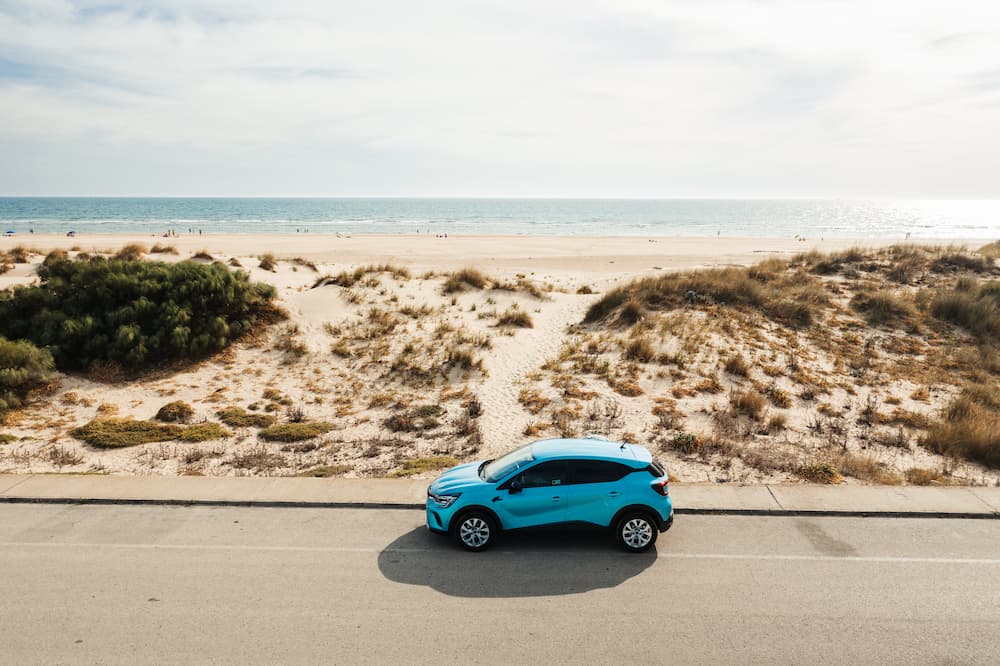
Tarifa faces Morocco. Under Islam it was a fort that watched the crossing. The Castle of Guzman el Bueno is a later Christian fortress on that older site. Walk the ramparts and the Gate of Jerez. The point of the visit is the water: this is where the two coasts look at each other.
- Castle of Guzman el Bueno — map
Vejer, Medina Sidonia and Arcos
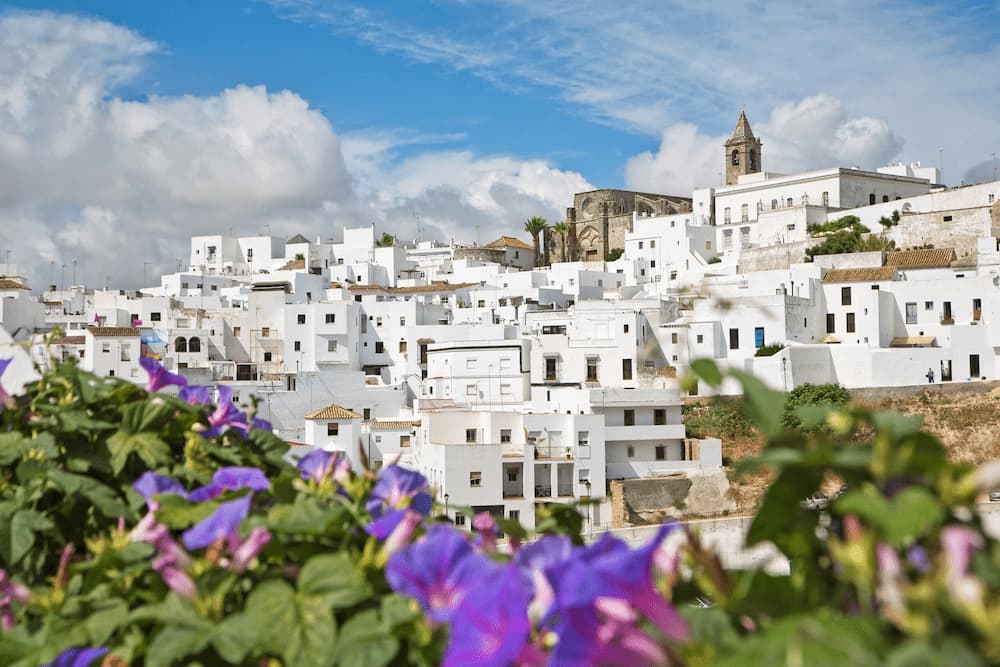
Vejer de la Frontera sat under Islamic rule from the eighth century until the mid-thirteenth. The white streets still fold back on themselves. Look at the castle gate, the wall walks and the way the town sits on the hill. You do not need a list of rooms.
- Vejer walls and castle gate — map
Medina Sidonia was Asidona: an inland administrative town. The arches of La Pastora and Belen and the Gate of El Sol belong to the ninth-to-twelfth-century walls.
- Arches and Gate of El Sol — map
Arcos de la Frontera was Medina Arkosh, a taifa of its own in the eleventh century. The ridge is the defence. The Tower of la Tradicion and the Arch of Matrera are the pieces that still read as that town.
- Tower of la Tradicion and Arch of Matrera — map
Jerez and El Puerto de Santa Maria
Jerez was Sherish. The Alcazar is the building to enter: twelfth-century Almohad work with baths, the octagonal tower, the keep, a stretch of wall, and a mosque later turned into a chapel. The street grid around it still owes something to that town.
- Alcazar of Jerez — map
El Puerto de Santa Maria was Al-Qanatir, a river port. The Castle of San Marcos is a Christian fortress that keeps the remains of an eleventh-century mosque inside the walls. That is the Islamic layer here, not a separate monument down the street.
- Castle of San Marcos — map
How to reach these towns
Jerez and El Puerto have trains from Seville and Cadiz. Tarifa, Vejer and Arcos need a car. From the Costa del Sol the usual road is the A-7 then inland toward Jerez, or the coast road to Tarifa if the strait is the point of the day.

Car hire: the flexible option
The practical way to link Tarifa, Vejer and Arcos in one day, or to add the Alcazar in Jerez without a bus change.
Hire a car at Malaga Airport
Taxi or private transfer
From Malaga Airport to a hotel in Jerez, Cadiz or Tarifa. A same-day return works for Jerez. Tarifa and Vejer are a longer day.
Book a transfer*No credit-card details are required to request a quote. Book the Alcazar in Jerez if you want the baths and the old mosque.
Other options
Trains serve Jerez, El Puerto and Cadiz. Buses reach Tarifa, Vejer and Arcos, slowly. The hill towns are easier with a car.
Practical tips
- If you only have one stop, make it the Alcazar in Jerez. It is the building with rooms, not only a street plan.
- Tarifa is for the strait. Go up on the walls and look south.
- Vejer and Arcos are walking towns. Park below and climb.
- The Castle of San Marcos is a Christian castle with a mosque inside. That is the layering here.
- Do not try Tarifa, Arcos and Jerez as three long interiors in one afternoon. Pick two.
Frequently asked questions about Islamic Cadiz
Is there a mosque I can visit?
In Jerez the Alcazar keeps part of the Almohad mosque, later used as a chapel. In El Puerto the mosque remains sit inside the Castle of San Marcos. Neither is a working mosque.
Why are so many towns called “de la Frontera”?
After the thirteenth-century conquest they sat on the Christian edge facing the last Islamic kingdom in Granada. The name stuck.
Where should I start?
The Alcazar in Jerez if you want rooms and walls. Tarifa if you want the crossing. Vejer if you want a hill town you can walk in an hour.
Can I see Morocco from Tarifa?
On a clear day yes. The two coasts are about fifteen kilometres apart at the narrowest point.
Do I need a car?
Not for Jerez or El Puerto. Yes if you want Tarifa, Vejer and Arcos on the same trip.
Is Cadiz city on this route?
The stops are Tarifa, the hill towns, Jerez and El Puerto. Cadiz city is the bay you pass, not the main visit this time.