



The most emblematic monuments in Malaga are undoubtedly the most popular. You should not miss the chance to visit them if you are in the city.
Alcazaba of Malaga

The Alcazaba, built next to the Roman Theatre, cleverly uses a hill and adapts perfectly to the terrain. Construction began in the 8th century using materials from the Roman Theatre. It was completed in the 11th century and has been part of Malaga’s skyline ever since – one of the monuments you really must see.
- Location: Calle Alcazabilla, 2
- Opening times 2026: Summer (1 Apr – 31 Oct): 9:00 – 20:00 | Winter (1 Nov – 31 Mar): 9:00 – 18:00 (last entry 1 hour before closing)
- Price: General €7 | Reduced €3 | Combined Alcazaba + Gibralfaro €10
- Sundays: Free entry from 14:00 onwards
- Find on map: Google Maps
Gibralfaro Castle
The Castle of Gibralfaro was built in the 14th century to defend the Alcazaba. Perched high on the hill and carefully restored, it offers spectacular panoramic views – perfect for some of the best photographs of Malaga.
- Location: Camino de Gibralfaro, 11
- Opening times: Same as the Alcazaba (9:00–20:00 summer / 9:00–18:00 winter)
- Price: General €7 | Combined ticket €10
- Find on map: Google Maps
Roman Theatre

You will hardly miss this monument if you visit the Alcazaba, as it sits right at its base. The Roman Theatre was built in the 1st century and remained in use for over 200 years. Parts of the Alcazaba were later constructed using stone from this very theatre.
- Location: Calle Alcazabilla
- Opening times: Tuesday to Saturday 10:00–18:00 | Sundays and public holidays 10:00–16:00 (closed Mondays)
- Entry: Free
- Find on map: Google Maps
Other Recommended Monuments
If you enjoy visiting historical sites and monuments, you will love the following list:
San Telmo Aqueduct

Built in the 18th century, this impressive hydraulic structure supplied water to Malaga. It is one of the largest engineering works of its kind in Spain and carried water from the Guadalmedina River to the city.
The aqueduct stretches over 10 kilometres and begins at the Molino de Inca.
- Location: Calle Llobregat 14, Ciudad Jardin district
- Find on map: Google Maps
House in Ruins

Although the house itself does not have great historical importance, it is a charming spot with beautiful views, set in the middle of nature.
It is an ideal place for a hiking route and to enjoy lovely panoramic views of Malaga in a peaceful natural setting.
This location was discovered via Google Maps and does not appear in any traditional guidebooks.
- Location: Sendero Picapedreros, near Cascada Ventura
- Find on map: Google Maps
Remains of the City Wall

During the Moorish period, a wall surrounded the city centre for protection. Today only a few sections remain, some in very good condition. One particularly interesting part can be seen both outside and inside a bookshop. It once had a gate called Puerta de Buenaventura, which was a popular thoroughfare at the time.
- Location: Calle Puerta Buenaventura 3
- Find on map: Google Maps
Other sections of the old wall can be found along Calle Carretería:
- Location: Calle Muro de las Catalinas 9
- Find on map: Google Maps
You can also see remains in the underground car parks at Plaza de la Marina and Muelle 1 in the port.
Calle Compañía

This long, narrow street is a classic example of Moorish urban design. It was formerly called Calle de los Guardas because many homes were given to soldiers after the Christian conquest. Today you will find the Carmen Thyssen Museum, the Tourist Information Office and several other historic buildings worth seeing.
The street ends where the old city wall once stood, now called Calle Puerta Nueva.
Find on map: Google Maps
Palaces and Historic Buildings
Malaga has many Renaissance buildings and other architecturally valuable structures. While walking around the city or visiting its museums, you will often wonder about the history behind these grand buildings:
Palacio de Buenavista

The Palacio de Buenavista currently houses the Picasso Museum. It is a 16th-century Renaissance building with Phoenician ruins underneath.
- Location: Calle de San Agustín 8
- Opening times: Usually 10:00 to 19:00 (may vary by season)
- Find on map: Google Maps
Palacio del Marques de Valdeflores
As you walk along Calle Carretería you will see this elegant 18th-century building, now used by the city council. It was built against the old city wall.
- Location: Calle Carretería 60
- Find on map: Google Maps
Palacio de Villalcazar

Former residence of the first Counts of Buenavista, built in the 18th century. It now serves as the Chamber of Commerce.
- Location: Calle Cortina del Muelle 23
- Find on map: Google Maps
Palacio de la Aduana

This handsome 19th-century building was originally planned as a customs house due to growing trade with America. It was later used as a tobacco factory and is now the Malaga Museum.
- Location: Plaza de la Aduana
- Find on map: Google Maps
Tabacalera Building (Old Tobacco Factory)

Built between 1923 and 1927 in regional style for the Spanish tobacco monopoly. Today it houses the Automobile Museum and the Russian Museum collection from St Petersburg.
- Location: Avenida de Sor Teresa Prat
- Find on map: Google Maps
Cathedrals and Churches in Malaga
After the Catholic army captured the city in 1489, many new religious buildings were constructed on the conquered land:
Malaga Cathedral (Catedral de la Encarnacion)

Built between the 15th and 18th centuries on the site of a former mosque. Located on Calle Molina Larios, it has an internal museum and two magnificent 18th-century organs with nearly 4,000 pipes.
- Location: Calle Molina Lario 9
- Find on map: Google Maps
Iglesia de La Victoria

Dedicated to the Virgin of La Victoria, inaugurated in 1700 by the Catholic Monarchs. It contains the Buenavista family pantheon.
- Location: Calle Fernando el Catolico 40
- Find on map: Google Maps
Iglesia de los Santos Martires

Founded in 1491 shortly after the conquest. It is one of the first four churches built after 1487 and is dedicated to Saints Ciriaco and Paula.
- Location: Plaza de los Martires Ciriaco y Paula 1
- Find on map: Google Maps
Capilla de San Lazaro
A late 15th-century chapel in Mudéjar style. In 1638 it was used to house victims of the great plague.
- Location: Plaza Victoria 19
- Find on map: Google Maps
Iglesia de San Juan Bautista
One of the first four churches built after the 1487 conquest, later remodelled in 1760. It is listed as a Bien de Interés Cultural.
- Location: Calle San Juan 3
- Find on map: Google Maps
Iglesia de San Felipe Neri
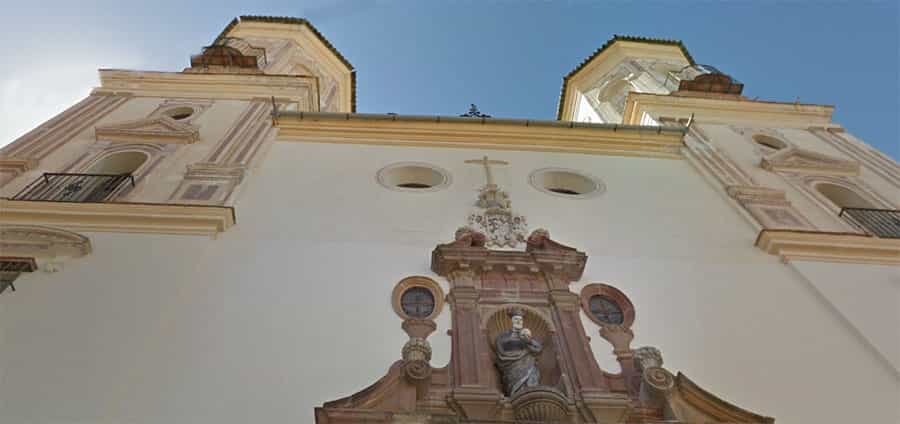
Built in the 18th century as the private chapel of the Count of Buenavista, next to his palace. The interior contains valuable artworks and paintings.
- Location: Calle Guerrero 6
- Find on map: Google Maps
Convento de San Agustin
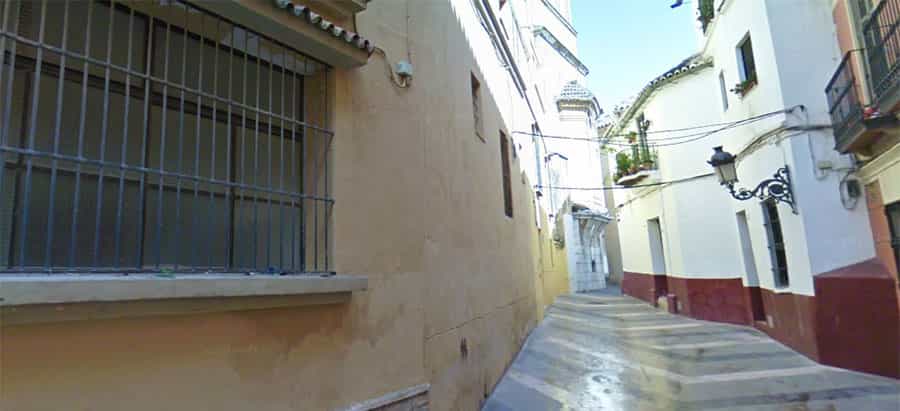
If you walk along this narrow street and wonder about the age of this building, here are some interesting details. This 16th-century convent stands on the former Calle Caballeros (now Calle San Agustin). The Augustinian monks purchased the land in 1576. Over the centuries ownership passed between the city council and the bishopric.
There are currently plans to restore the building and turn it into a public library.
- Location: Calle San Agustin
- Find on map: Google Maps
Abadia de Santa Ana
This 16th-century building on Calle Cister was remodelled in 1878. The convent was closed in 2009 due to a lack of nuns – only four remained, still following strict vows of silence and obedience as in medieval times.
- Location: Calle Abadia Sta. Ana 5
- Find on map: Google Maps
Capilla del Agua
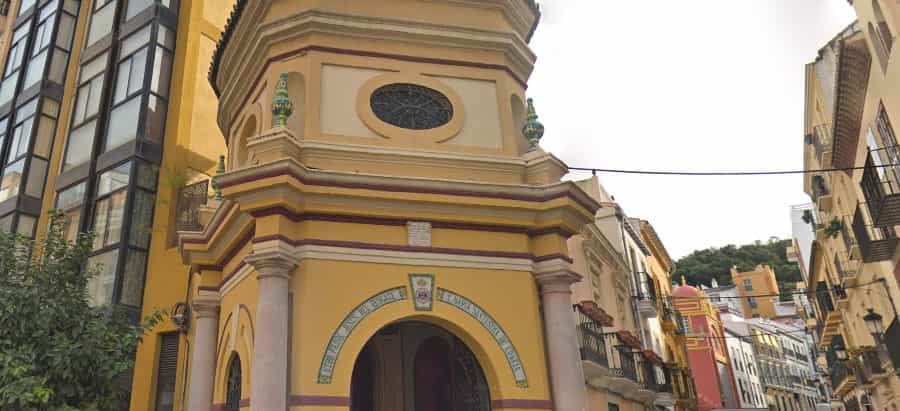
Inaugurated in 1800 by a brotherhood, this Baroque chapel is also known as Capilla Faro de la Victoria or Capilla del Rescate.
- Location: Calle Victoria 90
- Find on map: Google Maps
Iglesia y antiguo hospital de San Julian

Church and hospital built between 1683 and 1699 on land belonging to the city council. Inside there is a Holy Week museum and a plaque commemorating a visit by Queen Isabella II.
- Location: Calle Nosquera 16
- Find on map: Google Maps
Iglesia del Santo Cristo de la Salud

This late 16th-century church stands in Plaza de la Constitucion, at the end of Calle Larios. Very close by you will find the Carmen Thyssen Museum in the Palacio de Villalon (16th century) and the Escuela de San Telmo (1607), all located in Calle Compañía.
- Location: Calle Compañía
- Find on map: Google Maps
Iglesia del Sagrado Corazon

Continuing along Calle Compañía from Plaza de la Constitucion, you will see the Iglesia del Sagrado Corazon on the right, just past the museum.
This neo-Gothic building dates from 1920 and is located at the western end of Calle Compañía.
- Location: Plaza de San Ignacio s/n
- Find on map: Google Maps
Parroquia de Santiago Apostol

A 16th-century church in one of Malaga’s oldest streets, Calle Granada. It was built over a former mosque. This is where Pablo Picasso was baptised in 1881.
- Location: Calle Granada 78
- Find on map: Google Maps
Iglesia del Sagrario
In Isabelline Gothic style, this church stands right opposite Malaga Cathedral. Construction began in the 15th century, fell into ruins, and was rebuilt in the 18th century.
It has been a Bien de Interés Cultural since 1931.
- Location: Calle Molina Lario
- Find on map: Google Maps
Tourist Attractions in Malaga
The list above focuses on the main attractions in the city centre and surrounding areas, but Malaga has so much more to offer. Keep browsing our website to discover everything you can do in Malaga and the province:
| Monument / Attraction | Location |
|---|---|
| Alcazaba | Malaga |
| Aquapark | Torremolinos |
| Aquapark | Mijas-Costa |
| Palacio del Obispado | Malaga |
| Cathedral | Malaga |
| Cueva de Nerja | Nerja |
| Cueva de Basin | Marbella |
| Cueva del Tesoro | Malaga |
| Teatro Cervantes | Malaga |
| Cocodrilo Park | Torremolinos |
| El Retiro Subtropical Gardens | Malaga |
| El Torcal | Antequera |
| El Chorro | Alora |
| Folklore Art Museum | Malaga |
| Flamenco Museum | Malaga |
| Castillo de Gibralfaro | Malaga |
| « La Concepción » Botanical Garden | Malaga |
| Plaza de toros de la Malagueta | Malaga |
| Municipal Museum | Pizarra |
| Municipal Museum | Antequera |
| Museo Aula Del Mar Aquarium | Malaga |
| Paseo del Parque | Malaga |
| Roman Theatre | Malaga |
| Baños romanos de Las Bóvedas Roman Villa of Río Verde | Marbella |
| Selwo Adventure Park | Estepona |
| Selwo Marina | Benalmadena |
| Sea-Life Aquarium | Benalmadena |
| Tivoli World | Benalmadena |
* Opening times and prices may vary. We recommend checking the official website before your visit.




