Architecture Route in Jaen
This route explores the most important architectural landmarks of Jaen city: the Castle of Santa Catalina, the Renaissance palaces, the well-preserved Arab baths, historic fountains and the Cathedral. Ideal for a half-day or full-day visit from Malaga.
Route highlights
- Castle of Santa Catalina with panoramic views over the city and olive groves
- One of the largest and best-preserved Arab baths in Spain
- Renaissance palaces in the historic centre
- Jaen Cathedral (Renaissance and Baroque)
- Historic public fountains, some still providing drinking water
Castles overlooking the city
Castle of Santa Catalina (Castillo de Santa Catalina)
Dominating Jaen from the top of the hill of the same name, the Castle of Santa Catalina is a complex of fortifications. Its origins may reach back to Carthaginian times, and successive cultures reinforced and remodelled the site. Today it offers some of the best panoramic views over the city and the surrounding olive-growing countryside.
Otiñar Castle
A short distance from the capital, the Castle of Otiñar stands in a dramatic natural setting. Archaeological finds in the area include Bronze Age remains, cave paintings, a dolmen and stretches of ancient wall. Beside the castle lie the ruins of a 19th-century village that was later abandoned.
Renaissance and later palaces
The historic centre of Jaen contains several notable civil buildings, many of them from the Renaissance period:
- Palace of Villadompardo (late 16th century) – houses the Museum of Popular Arts and Customs and an art collection. Map
- Palace of the Vilches – a declared monument standing next to Plaza de la Constitución. Map
- Palace of the Viscount of Los Villares – another Renaissance building now used for public purposes.
Walking through the old streets around these palaces still conveys a strong sense of the city’s historic fabric. The modern Town Hall provides a contrasting example of contemporary architecture.
Arab Baths of Jaen
The Arab Baths of Jaen, located beneath the Palace of Villadompardo, are among the largest and best-preserved Islamic baths in Spain. Visitors can walk through the sequence of cold, warm and hot rooms (frigidarium, tepidarium and caldarium) and appreciate the sophisticated water systems and decorative details from the Moorish period.
Historic fountains
Jaen has long depended on its springs and public fountains. Several of them date back to the Islamic period or later centuries, and some still provide drinking water today. Notable examples include:
Other notable buildings
- Cathedral of Jaen – the city’s great architectural landmark, combining Renaissance and Baroque styles. Map
- Former Butchers’ building (1736)
- Las Tablas Bridge (1778)
- Old cemetery of the city Map
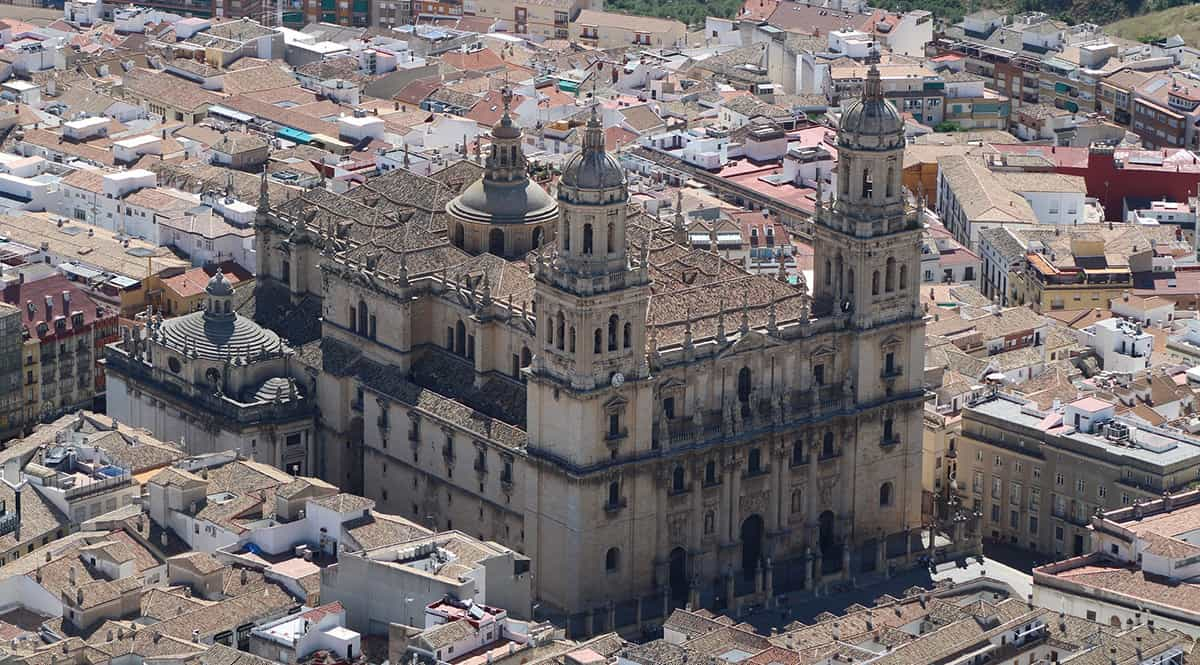
Exploring Jaen’s architecture from Malaga
Jaen is an easy day trip or short overnight stop from Malaga. The historic centre is compact enough to explore on foot once you arrive.

Car hire: the most flexible option
A hire car from Malaga Airport allows you to reach Jaen comfortably and also visit nearby sites such as the Castle of Otiñar or the Iberian remains in the wider province.
Hire a car at Malaga Airport
Taxi or private transfer
If you prefer not to drive, a private transfer can take you directly to Jaen for a focused visit to the cathedral, Arab baths and historic centre.
Book a transfer from Malaga Airport*There is no need to enter credit card details or make an advance payment. We recommend booking in good time.
Frequently asked questions
What is the most important monument in Jaen?
The Cathedral is the city’s great architectural landmark, while the Castle of Santa Catalina and the Arab baths beneath the Villadompardo Palace are equally essential for understanding its history.
Are the Arab baths worth visiting?
Yes. The Arab Baths of Jaen are among the largest and best-preserved Islamic baths in Spain and give a vivid sense of daily life and architectural skill in the Moorish period.
Can I visit the Castle of Santa Catalina?
Yes. The castle is accessible and offers both historical interest and outstanding panoramic views over Jaen and the surrounding countryside.
How far is Jaen from Malaga?
The drive is approximately 200 km and usually takes around 2 hours to 2 hours 15 minutes.