The White Villages Route
The White Villages Route (Ruta de los Pueblos Blancos) travels through the whitewashed mountain villages of Andalusia, especially those set in the foothills of the Betic ranges between the Atlantic and the Mediterranean. These villages cling to hillsides, ridges and gorges, their lime-washed houses standing out sharply against a landscape of pine, holm oak, cork oak and, in the higher areas, Spanish fir.
Route highlights
- Classic whitewashed mountain villages with Moorish street layouts
- Dramatic settings on hillsides, ridges and above gorges
- Castles and defensive remains from the frontier period between Muslim and Christian territories
- Two complementary areas: the western sierra (Ronda–Grazalema) and the eastern villages near the Costa del Sol and Axarquia
History and architecture
Many of these villages originated or grew as frontier settlements during the long centuries of contact and conflict between Muslim and Christian territories. Their elevated, easily defended positions explain the frequent presence of castles or ruined fortifications.
The urban pattern still shows strong Islamic influence: narrow, winding streets, covered passageways, arches spanning the roadway, and houses that seem stacked on the slope. After the Christian conquest the buildings were whitewashed and gradually took on the appearance we recognise today – simple cubic volumes, tiled roofs and the brilliant white that gives the “pueblos blancos” their name.
Western White Villages (Ronda and the Sierra de Grazalema)
This is the classic heartland of the White Villages, running through the mountains of Cadiz and the Ronda district of Malaga.
Mijas
Perched above the Costa del Sol, Mijas offers wide views of the Mediterranean. The old village has the typical whitewashed streets and a popular balcony viewpoint. It is one of the most accessible white villages from Malaga.
Casares
A striking hilltop village of Moorish origin with steep streets and the ruins of a medieval castle. Its elevated position gives excellent views over the surrounding countryside and towards the coast.

Ronda
One of the most famous towns in Andalusia, divided by the dramatic El Tajo gorge and linked by the 18th-century Puente Nuevo. It has a fine historic centre, a historic bullring and the Palace of Mondragón. Ronda is a natural hub for exploring the surrounding white villages.

Grazalema
Often regarded as one of the most beautiful villages in Spain, Grazalema sits in the heart of the Sierra de Grazalema Natural Park. It is known for its mountain setting, local blankets and cheeses, and as a base for walking.
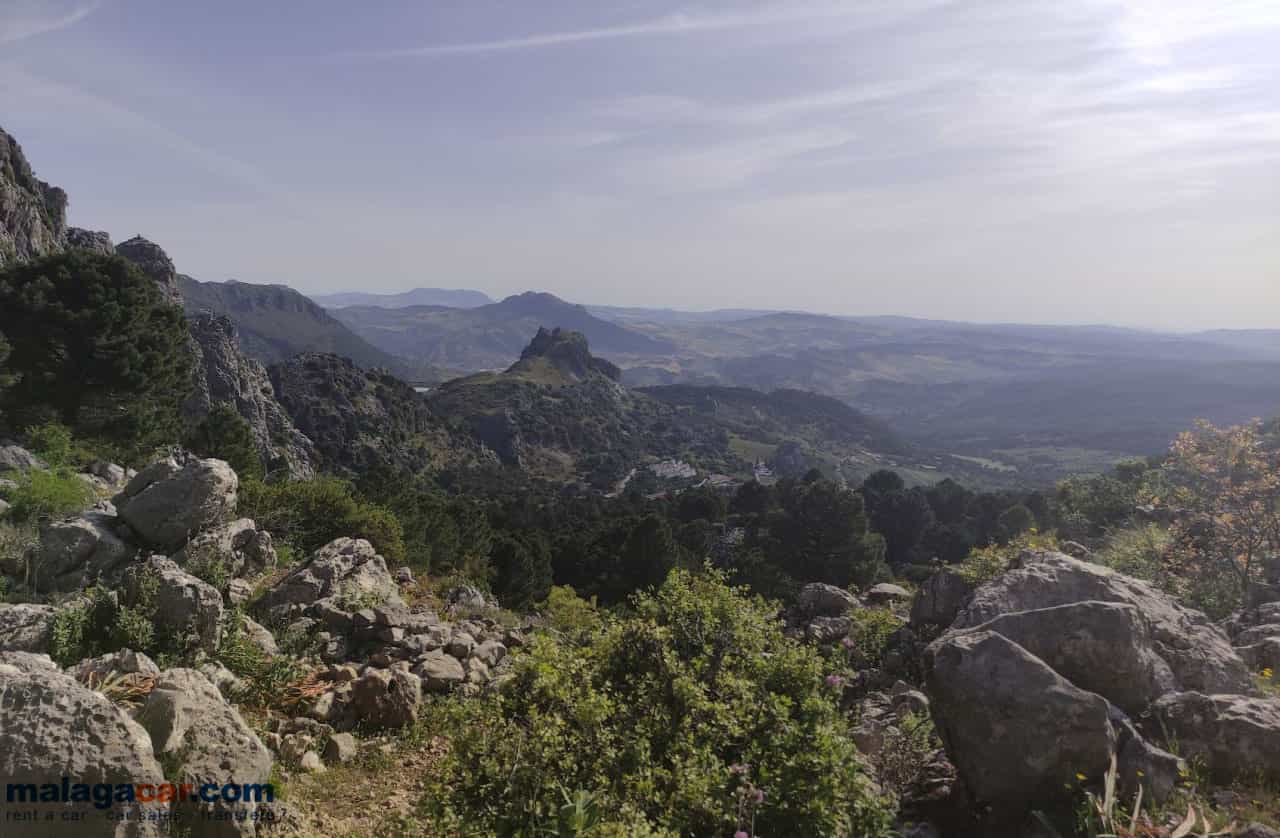
El Bosque
A quieter village on the edge of the Sierra de Grazalema Natural Park, useful as a gateway to the sierra and a pleasant stop for its green surroundings.
Eastern White Villages (Axarquia and the hills near the coast)
East of Malaga a different cluster of white villages rises into the hills of the Axarquia and the edge of Granada province. They are smaller and less visited than the western group, but share the same whitewashed character and hillside setting.
Frigiliana
One of the best-known white villages in the eastern area. Its steep, narrow streets still reflect the old Moorish layout. The village is also known for its traditional sugar-cane honey (miel de caña).
Jete, Otivar and Lentegi
Three smaller villages in the hills that offer a quieter experience. They retain the characteristic white houses, winding streets and views over the surrounding countryside, and make good short stops when exploring the area inland from the coast.
Practical tips for the route
- The most scenic roads are winding and sometimes narrow – allow extra time and drive with care.
- Parking is limited in the smaller villages; arrive earlier in the day when possible.
- Many villages repay a slow walk through the upper streets, where the views and the architecture are often at their best.
- Local products (goats’ cheese, honey, olive oil, sweet wines) are worth seeking out.
Exploring the White Villages from Malaga
Both the western and eastern groups of white villages are best visited by car. Public transport reaches some of the larger villages, but a car gives far greater freedom to combine several stops in a day.

Car hire: the most flexible option
A hire car from Malaga Airport is the best way to explore both the western White Villages around Ronda and Grazalema and the eastern villages such as Frigiliana.
Car hire Malaga Airport
Taxi or private transfer
If you prefer not to drive the mountain roads, a private transfer can take you to a base such as Ronda, Grazalema or Frigiliana.
Transfer from Malaga Airport*There is no need to enter credit card details or make an advance payment. We recommend booking in good time.
Frequently asked questions
What are the White Villages of Andalusia?
They are the traditional mountain villages of southern Spain characterised by whitewashed houses, narrow streets and elevated positions on hillsides or ridges. The best-known concentration lies in the mountains of Cadiz and the Ronda area, with further examples in the Axarquia east of Malaga.
Which white villages are closest to Malaga?
Mijas and Frigiliana are among the easiest to reach from Malaga. Casares and the villages around Ronda require a longer but very scenic drive.
Is Ronda considered a white village?
Ronda is larger than a typical white village, but it shares the same whitewashed historic centre and is the natural gateway to many of the classic pueblos blancos of the surrounding mountains.
Do I need a car for the White Villages Route?
Yes. A car is by far the best way to experience the route, as the villages are spread across mountain roads and public transport connections between them are limited.