Route of Modern Architecture in Andalusia
From the 1930s to the present day, Andalusia developed a distinctive modern architectural language. This period, especially between the two World Wars and in the decades that followed, saw architects move away from historicist revival and embrace a new approach based on functionality, spatial clarity and the use of contemporary materials and construction techniques.
Modern architecture in Andalusia revived a sense of open, fluid space that had largely been lost since the Baroque period, while placing strong emphasis on how a building should respond to its practical purpose. The result is a body of work that ranges from rationalist public buildings and experimental new towns to tourist developments and refined late-20th-century civic architecture.
The architects of modernism
Many of the leading figures of this movement were young architects trained at the School of Madrid. The school’s strong emphasis on drawing and visual composition left a clear mark on their work. At the same time, German architectural magazines played an important role in spreading the ideas of rationalism (an architectural approach that prioritises function, simplicity and the honest expression of structure and materials) among Spanish professionals.
These influences helped shape a generation that sought to modernise Andalusian architecture without completely severing its ties to the local climate, light and landscape.
Public buildings and universities
The social needs of the mid-20th century led to the construction of many public buildings that became testing grounds for new architectural ideas. Recommended places to explore include:
- The universities of Cordoba, Seville and Almeria
- Hospitals in Linares and Cordoba
- The bus stations of Seville and Almeria
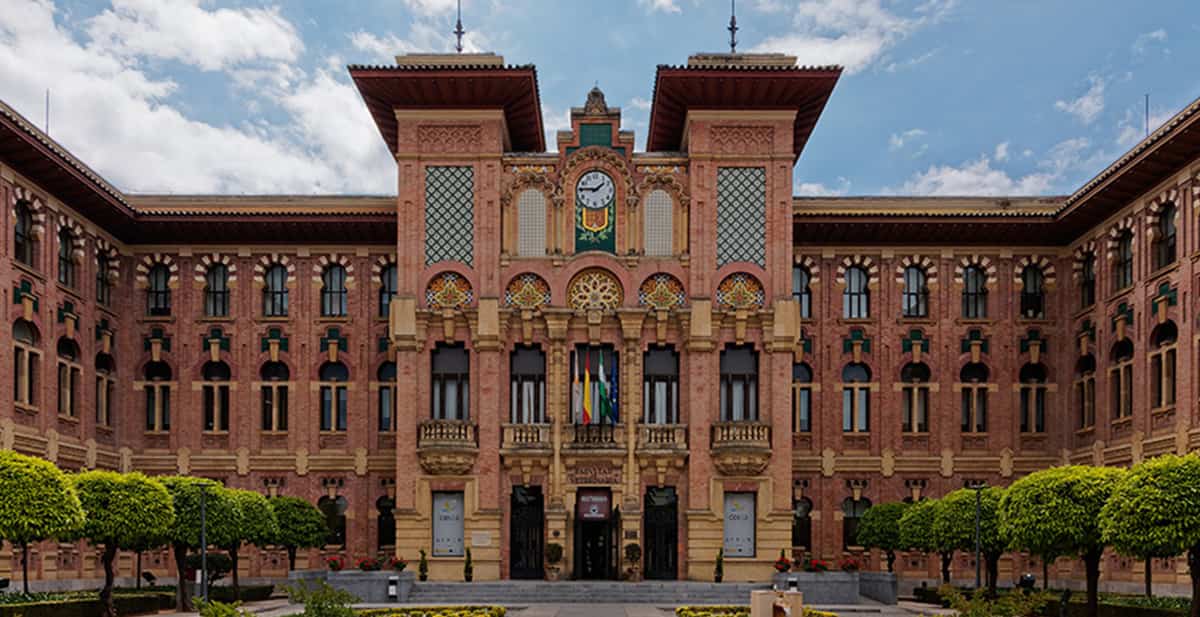
These projects often combined clean lines, generous natural light and a careful relationship with their urban or landscape setting.
New townships and tourist developments
In the post-war decades, architects also designed entirely new settlements in previously sparsely populated areas. Two notable examples are Esquivel (in the province of Seville) and Miraelrio (in Jaen). Esquivel, planned by Alejandro de la Sota in the early 1950s, is particularly interesting for its geometric fan-shaped layout and its reinterpretation of traditional Andalusian whitewashed architecture in a modern key.
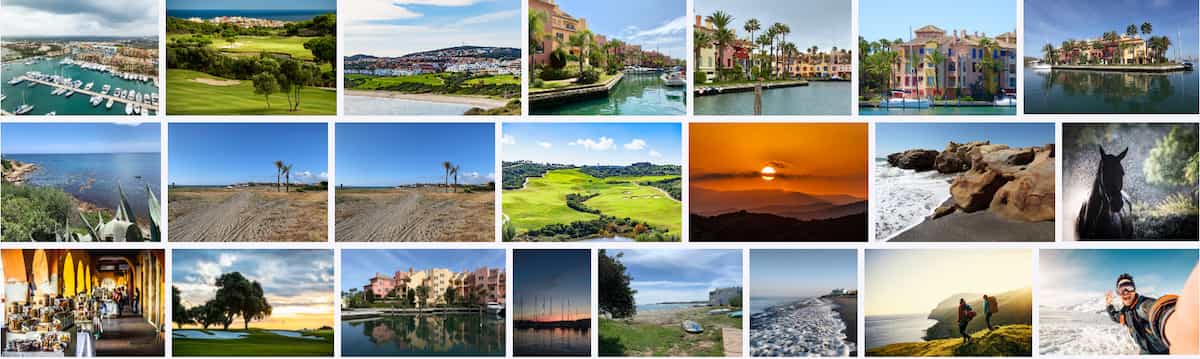
At the same time, the growth of tourism along the coasts of Malaga and Cadiz produced luxurious residential and leisure developments. Sotogrande, on the Cadiz coast, stands out as one of the most ambitious. Originally conceived in the 1960s, it has continued to evolve with high-quality contemporary villas and resorts that often blend modern design with Mediterranean references.
The Seville School of Architecture
The founding of the Seville School of Architecture in the 1960s marked a turning point. From this moment, Andalusia began to produce its own coherent architectural discourse. Architecture was understood as a discipline that required historical knowledge, careful reflection and the use of memory as a design tool. Instead of simply repeating standard types, architects focused on interpreting the specific site and making thoughtful use of construction materials.
These principles can be seen in buildings such as:
- The School of Exact Sciences in Seville
- Santa Justa railway station in Seville (designed by Cruz y Ortiz and inaugurated in 1991, still one of the city’s most important modern landmarks)
- The expansion of the Provincial Museum of Cadiz
- The Music Conservatory of Almeria
Santa Justa, in particular, remains a powerful example of late-20th-century modern architecture in Andalusia, with its clear structural expression and generous handling of light and space.
The lasting legacy
Modern architecture forms a significant chapter in Andalusia’s built heritage. It is characterised by an innovative approach to space, a strong emphasis on functionality, and the confident use of new materials and construction methods. The buildings and urban experiments of this period continue to influence how architects and planners work in the region today.
How to explore modern architecture in Andalusia
A rewarding route can combine:
- Key public and educational buildings in Seville, Cordoba and Almeria
- A visit to the planned settlement of Esquivel
- The coastal landscape and contemporary architecture of Sotogrande
- Santa Justa station as a major late-modern landmark in Seville
Many of these works can be appreciated from the outside; some university and cultural buildings are accessible during opening hours.
Getting around the modern architecture sites from Malaga
The examples of modern architecture mentioned on this page are distributed across several provinces. A car offers the greatest flexibility for visiting universities, planned settlements and coastal developments at your own pace.

Car hire: the most flexible option
A hire car from Malaga Airport makes it easy to reach Seville, Cordoba, Almeria, Esquivel and the Sotogrande area without being limited by public transport schedules.
Hire a car at Malaga Airport
Taxi or private transfer
If you prefer not to drive, you can book a private transfer from Malaga to Seville or another city and explore selected modern buildings on foot or by local transport.
Book a transfer from Malaga Airport*There is no need to enter credit card details or make an advance payment. We recommend booking in good time.
Frequently asked questions about modern architecture in Andalusia
What characterises modern architecture in Andalusia?
It is characterised by an emphasis on functionality, clear spatial organisation, the use of new materials and construction techniques, and a response to local climate and landscape, moving away from pure historicist revival.
What is rationalism in architecture?
Rationalism is an approach that prioritises function, simplicity, structural honesty and the clear expression of materials. It was an important influence on many modern architects working in Spain from the 1930s onwards.
Why is Santa Justa station important?
Designed by Cruz y Ortiz and opened in 1991, Santa Justa is one of the most significant late-20th-century modern buildings in Seville. It is admired for its structural clarity, handling of light and generous public spaces.
What is special about Esquivel?
Esquivel is a planned settlement designed in the early 1950s by Alejandro de la Sota. Its fan-shaped layout and modern reinterpretation of traditional Andalusian white architecture make it one of the most interesting examples of post-war new towns in the region.
Is Sotogrande an example of modern architecture?
Yes. Although it began as a luxury tourist development in the 1960s, Sotogrande has continued to evolve and contains many examples of high-quality modern and contemporary architecture, particularly in its villas and resorts.