Antequera: what to see and how to get there
Antequera lies inland in the province of Malaga and has the largest municipal area in the province. Its position between Malaga, Cordoba, Granada and Seville has made it an important crossroads in Andalusia.
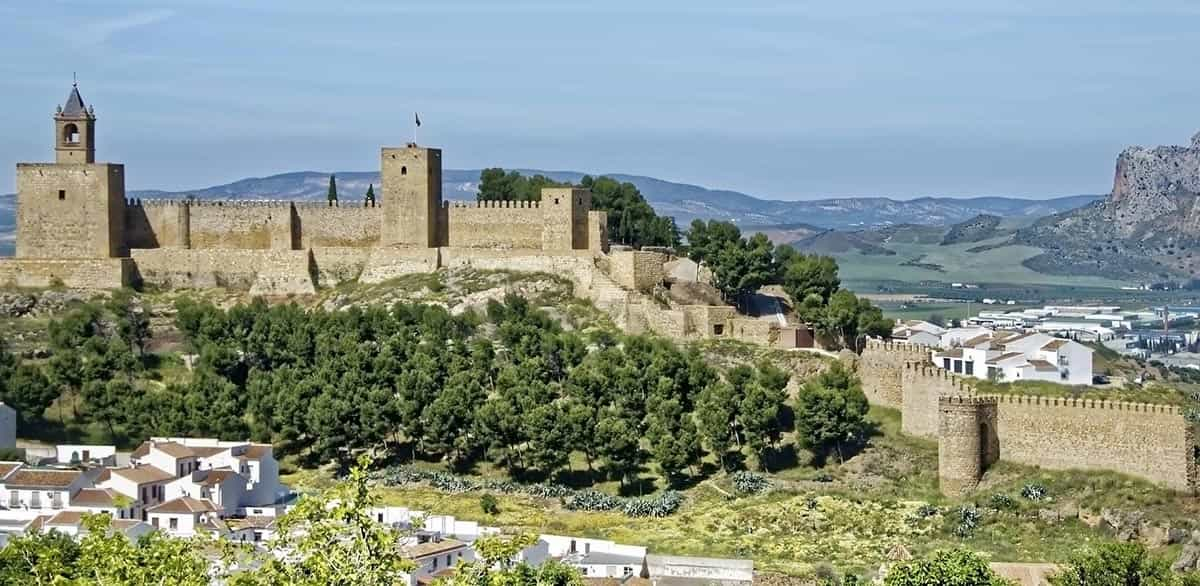
The city has churches, palaces and a medieval fortress, with two very different attractions beyond the old town: the Antequera Dolmens and the limestone landscape of El Torcal. The three megalithic monuments, La Peña de los Enamorados and El Torcal together form the Antequera Dolmens Site, inscribed on the UNESCO World Heritage List in 2016.
The drive from Malaga Airport usually takes around an hour, depending on traffic and your route. Antequera makes a good day trip, although staying overnight gives you more time to visit the monuments and explore the surrounding area.
History of Antequera
The dolmens show that this area was inhabited in prehistoric times. Later, the Roman town of Antikaria and the settlements around it left a legacy that you can explore today at the city museum.

Under Muslim rule, Madina Antaquira became an important frontier fortress from the 13th century onwards. Prince Ferdinand captured the town on 16 September 1410. After the conquest of Granada in 1492, Antequera lost its role as a frontier town and expanded beyond its walls.
Trade and agriculture supported its growth during the 16th and 17th centuries, alongside the construction of churches, convents and grand townhouses. Much of the Mannerist and Baroque architecture that characterises the city dates from the 17th and 18th centuries.
Epidemics affected the population in the early 19th century, and French troops occupied Antequera in 1810 during the Peninsular War. Its subsequent recovery was linked, among other activities, to the woollen textile industry.
What to see in Antequera
Many of the monuments are in the old town and can be explored on foot. The Alcazaba and Santa Maria stand in the upper part of town, while the city museum, churches and palaces provide further stops as you walk through the streets and squares of the centre.
Alcazaba, Arco de los Gigantes and Santa Maria
The Alcazaba preserves the fortified enclosure of the medieval town. Its main features include the Torre del Homenaje, also known as the Torre de Papabellotas, and the Torre Blanca. The Papabellotas clock and bell were installed in a small pavilion on top of the Torre del Homenaje. From here you can look out over the town and the surrounding agricultural plain (map).
The Arco de los Gigantes leads into the historic monument area. Nearby, the Las Almenillas viewpoint is a place to pause before continuing to the collegiate church.
The Real Colegiata de Santa María la Mayor, built in the 16th century, combines a Renaissance façade with Gothic elements and timber Mudéjar roofs over its nave and two aisles. It stands beside the Alcazaba, so both can be visited on the same walk (map).
Churches, convents and Plaza del Portichuelo
- Plaza del Portichuelo: home to the Capilla-Tribuna de la Virgen del Socorro, built in 1715. Its open galleries and arches set this chapel apart from the churches in the centre.
- Colegiata de San Sebastián: construction began in 1548 under the direction of Diego de Vergara. Its Renaissance doorway and Baroque tower reflect the different stages of the building’s history (map).
- Iglesia de San Pedro: another 16th-century church, with ribbed vaults that distinguish it from the Mudéjar roofs of Santa Maria (map).
- Iglesia del Carmen: worth visiting for its Mudéjar timber ceiling and the three large altarpieces in the main chapel, particularly the central one, made from ungilded wood (map).
- Convento de la Encarnación: founded in the 16th century, this convent forms part of Antequera’s religious heritage (map).
- Iglesia de Nuestra Señora de Loreto: originally associated with the Jesuits and known as Las Recoletas after the Augustinian nuns who later occupied the complex.
- San Zoilo and La Trinidad: the monastery of San Zoilo, founded in the 16th century, and the 17th-century church of the Trinidad convent are further stops on a walk around the city’s religious buildings.
City museum, palaces and Puerta de Granada
The Palacio de Nájera, an 18th-century palace on Plaza del Coso Viejo, houses the Museo de la Ciudad de Antequera (MVCA), the city museum. Its archaeological and art collections trace the area’s history. One of its highlights is the Efebo de Antequera, a Roman bronze sculpture of a young man (map).
- Palacio de las Escalonias: a palatial townhouse from the early 17th century, with an Italian-influenced Mannerist entrance (map).
- Palacio de los Marqueses de la Peña de los Enamorados: built in the second half of the 16th century, combining Mudéjar and Renaissance elements (map).
- Casa del Conde de Pinofiel: an example of Antequera’s secular Baroque architecture. An inscription on the façade dates its construction to 1762 (map).
- Puerta de Granada: built in 1748, this gateway recalls one of the old entrances to Antequera. Its present appearance includes later alterations.
Antequera Dolmens
The archaeological complex comprises the Menga and Viera dolmens and the Tholos of El Romeral, prehistoric burial monuments. Menga is notable for its enormous stone slabs and its alignment with La Peña de los Enamorados. El Romeral has chambers with corbelled domes and is aligned with El Torcal.
Menga and Viera share one site, while El Romeral is at a separate location around 4 km away. Read our guide to the Antequera Dolmens to plan your visit.

El Torcal de Antequera
The Paraje Natural Torcal de Antequera, a protected natural area south of the city, is known for its karst landscape. Water has eroded the limestone over millions of years, forming passages, towers and blocks with recognisable shapes. Marine fossils reveal the origins of these rocks.
The marked trails let you explore the terrain, its adapted vegetation and wildlife such as the Spanish ibex and griffon vulture. The green route is around 1.5 km long and usually takes about 45 minutes; the yellow route is around 3 km and takes roughly two hours. Both are circular walks, but the ground is stony and uneven.
Wear footwear with good grip and stay on the marked trails: it is easy to lose your bearings away from them. On busy days, vehicle access to the upper car park is regulated. You will find more information about routes and access in our guide to El Torcal de Antequera.

What to eat in Antequera
The mollete de Antequera, a bread roll with a soft crumb, is a breakfast staple, served toasted with olive oil, tomato or manteca colorá, a seasoned lard spread. For lunch, try porra antequerana, a thick, cold soup made with tomatoes, bread, oil, garlic and peppers.
Local sweets include bienmesabe, made with almonds, and mantecados, traditional crumbly biscuits. A walk through the centre is an opportunity to stop and try some of these specialities.
Fairs and festivals in Antequera
Antequera holds two main traditional fairs, as well as Holy Week celebrations and festivals honouring its patron saints. If you would like to visit during one of them, check the programme for that year on the council website.
Real Feria de Agosto: the August Fair
The fair takes place in the second half of August. During the day, some of the festivities are held in the centre. At night, the fairground brings together casetas, venues set up for the celebrations, alongside funfair rides and live music. The programme usually also includes bullfighting events and other activities.
Feria de Primavera and AGROGANT
Usually held in late May, the Spring Fair coincides with AGROGANT, Antequera’s agricultural and livestock fair. Food and agricultural machinery displays and livestock activities are combined with concerts, fair venues and funfair rides.
Holy Week
Processions make their way through the old town. One local tradition is correr la vega: at the end of the procession, some of the platforms carrying religious images are carried at a brisk pace up the slopes leading back to their churches.
Patron saint festivals
Services and a procession honouring the Cristo de la Salud y de las Aguas take place in May. 8 September is the feast day of the Virgen de los Remedios. Celebrations for Santa Eufemia are held around 16 September, with a procession and traditional bonfires.
Planning your visit to Antequera
For a first visit, you could spend the morning at the dolmens, then explore the centre, the Alcazaba and Santa Maria. The order will depend on opening times and which monuments you would like to visit inside.
If you also want to walk in El Torcal, allow time for the drive and the trail. To visit museums and churches without rushing and explore the surrounding area, it is easier to spread your visit over two days.
The old town has steep streets, particularly on the way up to the Alcazaba and Portichuelo. In summer, save longer walks for the cooler parts of the day. Before setting out, check the monument opening times on Turismo de Antequera.
How to get to Antequera from Malaga
By car from Malaga and the airport
From Malaga city, take the A-45 towards Cordoba and follow the signposted exits for Antequera. The distance is around 50 km, depending on your starting point. The drive from Malaga Airport usually takes about an hour. You can take the A-7 and join the A-45, following signs for Antequera.
The A-45 also connects Antequera with Cordoba, while the A-92 provides access from Seville and Granada. A car makes it easier to travel between the different sites if you want to visit the dolmens and El Torcal on the same trip.
The map shows the route from the MálagaCar premises, near the airport, to Antequera.
By bus
Bus route M-253 Malaga–Antequera connects the two cities and stops in Casabermeja. It leaves from Malaga bus station, beside María Zambrano railway station, and arrives at Antequera bus station on Paseo García del Olmo. Check the M-253 timetable to plan your outward and return journeys.
From the airport, you can travel into Malaga first and catch the interurban bus from there. Antequera also has local buses for journeys within the town.
By train: which station to choose
When buying your ticket, distinguish between these stations:
- Antequera AV: beside the built-up area, around 2 km from the centre. This is the closest station for visiting the town.
- Antequera-Santa Ana: a high-speed railway station around 18 km from the town. It has long-distance and regional services. To reach the centre, you will need to continue by road, either by taxi or by bus if the timetable suits your arrival.
- Bobadilla: a station on the conventional railway network, outside the town in Bobadilla Estación. It is a different station from Antequera AV and Antequera-Santa Ana.
There are rail connections to Antequera from Málaga-María Zambrano railway station. Check Renfe for your arrival station and whether your chosen service is direct. From the airport, you can take the C-1 local train (Cercanías) to Málaga-María Zambrano and change trains there. The local train does not run directly to Antequera.

Exploring Antequera and the surrounding area by car
A hire car lets you combine the old town, the dolmens and El Torcal without relying on public transport timetables. You can collect it in Malaga and arrange your visits around the time you have available.
Hire a car in Malaga
Taxi or private transfer to Antequera
If you would rather travel straight to your accommodation without driving, you can book a private transfer from Malaga Airport. It is a practical option when travelling with luggage or as a group.
Taxi and transfer information*No advance payment is required and cancellation is free. We therefore recommend booking ahead to secure vehicle availability and the price.
Frequently asked questions about Antequera
Can you visit Antequera in one day?
Yes. In one day, you can visit the dolmens and explore the old town, including the Alcazaba and Santa Maria. If you also want to walk in El Torcal or visit several museums and church interiors, it is easier to spread your visit over two days.
Which railway station is best for visiting Antequera?
Antequera AV is the closest station to the town, around 2 km from the centre. Antequera-Santa Ana is around 18 km away, so you will need to continue by taxi or bus, depending on the available services. Check the arrival station before buying your ticket.
Do you need a car to visit Antequera?
You can arrive by train or bus and explore much of the old town on foot, although there are hills on the way up to the Alcazaba and Portichuelo. A car is useful for visiting El Torcal and travelling between the different dolmen sites.
Can you visit the dolmens and El Torcal on the same day?
Yes, especially if you have a car. Plan your visit to the dolmens around their opening times and allow time to travel to El Torcal and walk a trail. As a guide, the green route usually takes about 45 minutes and the yellow route around two hours, excluding travel time.
Tourist information for Antequera
- Tourist information office: calle Encarnación, 4, bajo A, 29200 Antequera.
- Tourist information telephone numbers: 952 70 25 05 and 952 70 83 05.
- Official tourism website: Turismo de Antequera.
- Town hall: calle Infante Don Fernando, 70, 29200 Antequera.
- Town hall telephone number: 952 70 81 00.
- Council website: Antequera Town Council.