Costa Tropical in Granada: Europe’s Only Subtropical Coast – Beaches, Villages and Perfect Weather
The Costa Tropical forms the coastline of the province of Granada and is recognised as the only subtropical coast on the European mainland. Its microclimate, sheltered by the Sierra Nevada which blocks cold northerly winds, provides mild conditions with more than 320 sunny days a year and an average temperature of 20 °C. This climate supports the cultivation of tropical fruits such as mangoes, avocados, cherimoyas (a creamy, custard-like fruit) and sugar cane.
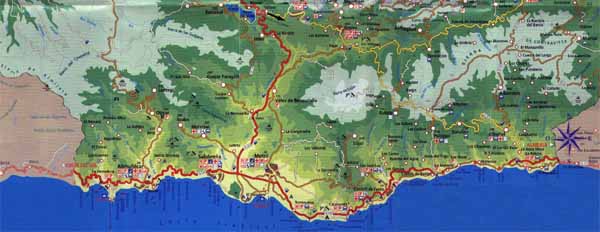
Detailed map of the Costa Tropical showing its main villages and beaches.
Although it shares similar latitudes with the Costa del Sol (around 36.7° N) and the Costa de la Luz (36–37° N), the Costa Tropical stands out for its warmer subtropical character, lush vegetation and lower levels of tourist development compared with other Andalucian coasts.
With nearly 100 km of shoreline, the Costa Tropical offers everything from fully equipped urban beaches to secluded coves ideal for naturism and diving. It is a top choice for searches such as “beaches in Granada” or “best subtropical beaches in Spain”.
History of the Costa Tropical: A Legacy of Ancient Civilisations
The Costa Tropical has a captivating history stretching back 3,000 years. Phoenicians settled in Almunecar, a key point for silk trade. Romans and Arabs left lasting marks including walls, aqueducts and castles – among them San Miguel Castle in Almunecar and Salobrena Castle, built on Roman and Nasrid foundations. The Reconquista in 1492 prompted the construction of 16th-century churches, while sugar-cane cultivation introduced by the Arabs peaked in the 19th century with mills such as those in Motril, a tradition that lives on in Ron Montero rum.
This heritage, combined with today’s farming of exotic fruits, makes the Costa Tropical a highlight for cultural tourism in Andalucia – ideal for those interested in “coastal history Granada” or “archaeological sites Costa Tropical”.
Places of Interest on the Costa Tropical Not to Be Missed
The Costa Tropical boasts a rich cultural and historical offering that invites visitors to explore its sites. Here is a selection of the highlights along the Granada coast:
San Miguel Castle (Almunecar): Nasrid fortress with sea views, built over Roman remains. (Map)
Salobrena Castle: Imposing Arab structure atop a rocky outcrop, with Nasrid gardens. (Map)
Cave of the Seven Palaces (Almunecar): Archaeological museum in a Roman-excavated cave containing Phoenician remains. (Map)
El Majuelo Botanical Park (Almunecar): Subtropical garden with sculptures and a Phoenician necropolis. (Map)
Sanctuary of Nuestra Senora de la Cabeza (Motril): 16th-century temple with panoramic views, linked to Nasrid legends. (Map)
Pre-industrial Sugar Museum (Motril): Reconstructions of mills and presses telling the story of sugar cane. (Map)
Palacete de la Najarra (Almunecar): 19th-century building with Mozarabic tiles and an oriental garden. (Map)
White Houses of Salobrena: Historic district with cobbled streets and the scent of jasmine.
Motril Port: Seafaring enclave with sugar-cane history and Mediterranean views. (Map)
Maro-Cerro Gordo Cliffs: Nature reserve with caves and trails for wildlife observation. (Map)
The Historic Charm of Almunecar
Almunecar, with 19 km of coast and more than 26 beaches, blends Phoenician and Roman history in a lively setting. Its old town of cobbled streets is home to San Miguel Castle and the Cave of the Seven Palaces, witnesses to millennia of civilisation.
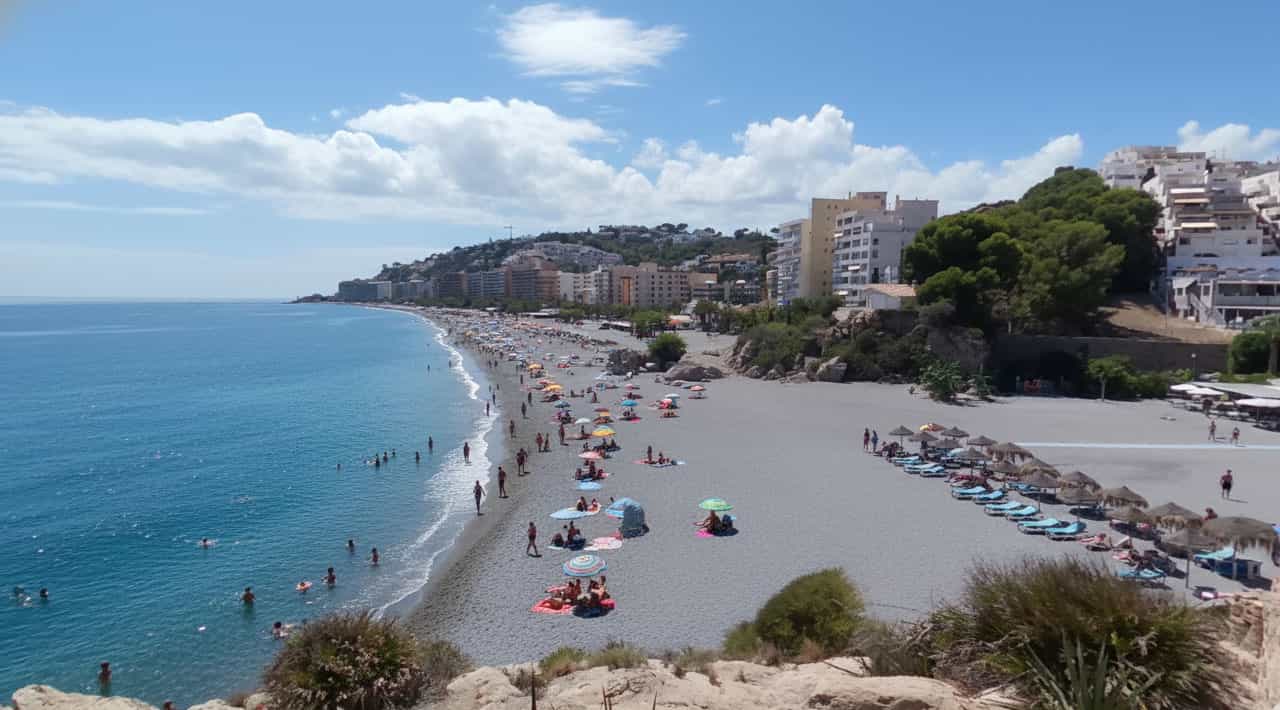
San Cristobal Beach in Almunecar, one of the emblems of the Costa Tropical.
Salobrena: Castle and White Alleys
Salobrena preserves tranquil beaches in the shadow of its Arab castle with Nasrid gardens that evoke al-Andalus. The upper district, with its labyrinthine layout, invites strolls that reveal the Moorish essence of the Costa Tropical.
Motril: Port, Rum and Sugar-Cane Traditions
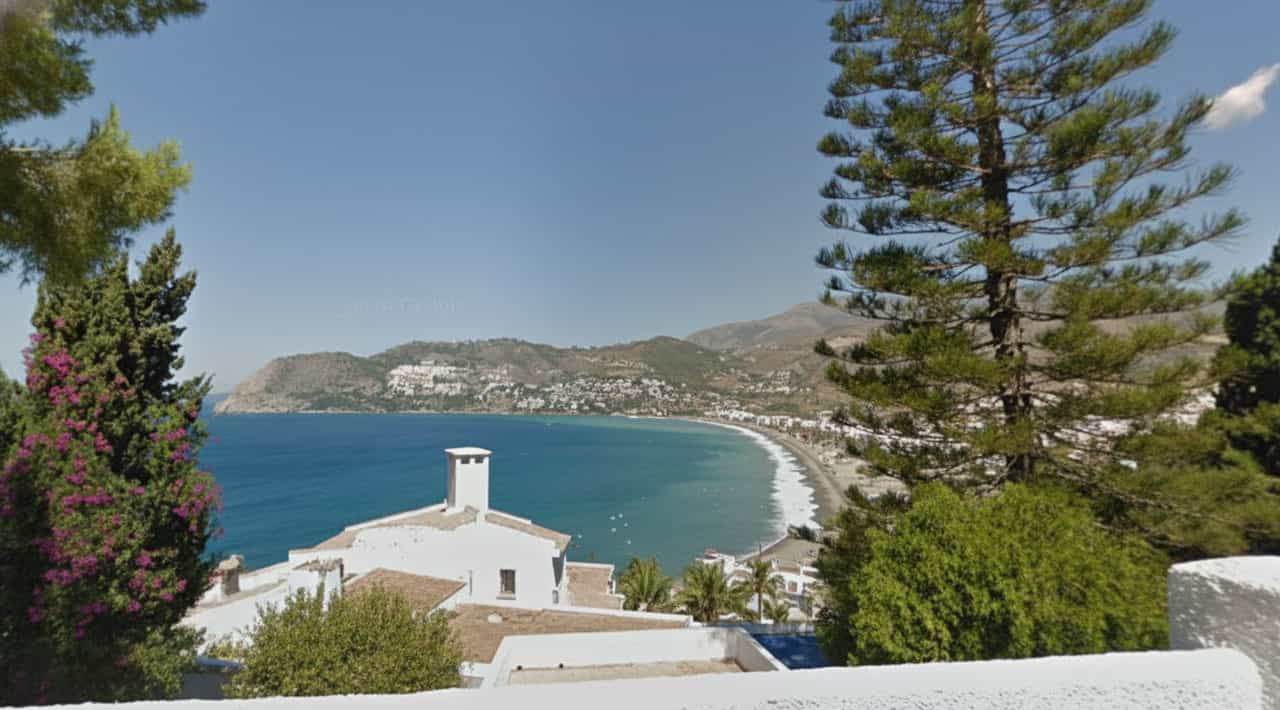
La Herradura Bay, near Motril, perfect for exploring the port and its historic traces.
Motril, home to the main port on the Granadan coast, excels with rum production and Granada Beach beside golf courses and beach bars. The Sugar Museum recounts the 19th-century cane boom. (Map)
Beaches of the Costa Tropical: Sun and Sand in a Subtropical Setting
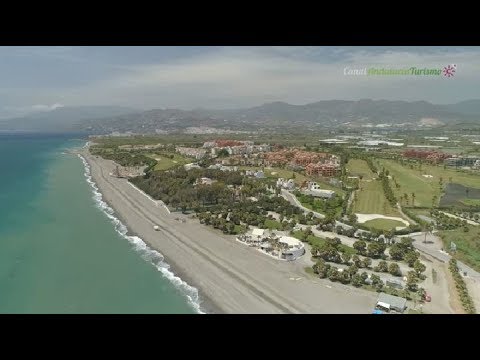
Velilla Beach in Almunecar, an urban beach with full facilities on the Costa Tropical.
The Costa Tropical has 24 urban and semi-urban beaches, ranging from wide sandy stretches to rocky coves. Here are some of the best:
San Cristobal Beach (Almunecar): Blue Flag with fine sand and calm waters, family-friendly.
Puerta del Mar Beach (Almunecar): Urban with beach bars and close to the historic centre.
Velilla Beach (Almunecar): Extensive and well-equipped, great for water sports.
La Herradura Cove (Almunecar): Sheltered bay for diving and kayaking.
Cantarrijan Beach (Almunecar): Naturist beach in a natural setting.
La Guardia Beach (Salobrena): Quiet with views of the Arab castle.
La Charca / Caleton Beach (Salobrena): Small and peaceful, good for surfing.
Punta del Rio (Salobrena): Remote and windy, ideal for windsurfing.
Granada Beach (Motril): 2 km long with a golf course and campsite by the sea.
Poniente Beach (Motril): Wide with beach bars and local atmosphere.
Carchuna Beach (Motril): Natural and expansive, near cliffs.
Calahonda Beach (Motril): Bordering Almeria with clear waters.
These beaches are complemented by coves such as those of Maro-Cerro Gordo, providing variety for every taste on the Costa Tropical.
Activities on the Costa Tropical: Beyond Sun and Sand
The Costa Tropical offers a wide range of experiences, from cultural tours to nature adventures. Explore the Maro-Cerro Gordo Cliffs nature reserve for hiking and birdwatching or dive in La Herradura, where posidonia meadows, groupers and octopuses abound.
Diving and snorkelling: In coves like Cantarrijan or El Caleton with exceptional biodiversity.
Kayaking and stand-up paddleboarding: In sheltered bays such as La Herradura or Granada Beach.
Golf: On seaside courses like Motril with subtropical views.
Hiking: Trails through the Sierra de Lujar or tropical valleys in villages such as Itrabo.
Cultural visits: Tours of sugar museums or Nasrid castles.
Cycling: Along the Via Verde of the Costa Tropical through avocado groves.
Practical tip: Book water sports activities in advance during high season to secure equipment and local guides.
Discover a variety of activities on the Costa Tropical in this video.
Gastronomy of the Costa Tropical: Flavours from Sea and Subtropical Orchard
The cuisine of the Costa Tropical combines seafood with the fertility of its valleys, influenced by Arab and Roman traditions. Try quisquillas from Motril, red prawns briefly cooked in salted water, or sun-dried octopus grilled over charcoal, a coastal speciality. Tropical salads mix local avocados with cherry tomatoes and mango, while fried fish captures Mediterranean freshness.
From the Arab sugar-cane legacy comes Ron Montero, used in desserts such as pestinos (sweet dough rolls) or tortas reales (almond cakes). Dishes like moraga de sardinas (sardine stew in a clay pot) or guacamole with anchovies embody simplicity and authenticity. Pair with wines from the DO Granada region in Contraviesa or remojones – oranges with salt cod.
Key note: Visit fish auctions in Motril or Almunecar for fresh seafood and seasonal orchards for exotic fruit.
The Most Charming Villages of the Costa Tropical
Seventeen municipalities make up this region, with coastal and inland settlements distinguished by lush vegetation and heritage. The main ones are:
Others such as La Herradura or Velez de Benaudalla offer sheltered coves and tropical valleys for peaceful escapes.
Costa Tropical Compared with Other Andalucian Coasts
In contrast to the Costa del Sol, the Costa Tropical has less mass tourism and a unique subtropical climate with comparable beaches but denser tropical gardens. Compared with the Costa de la Luz, there is less wind here, favouring relaxation in green surroundings. Ideal for searches such as “holidays on the Granada coast” or “countryside and beach in Andalucia”.
Adjoining the Costa de Almeria, as between Motril-Calahonda and Castell de Ferro, it promises less crowding and more subtropical character – perfect for “wild beaches Andalucia” or “subtropical destinations in Spain”.
How to Get Around the Costa Tropical: Your Transport Guide
The Costa Tropical, a subtropical gem in Granada, provides flexible options to arrive comfortably and explore its beaches and villages. From Malaga Airport or on trips to nearby areas such as Nerja or Almeria, these choices suit most travellers.
Car Hire: Freedom to Explore
To tour the Costa Tropical and its tropical valleys, including detours to the Malaga Axarquia or the Almeria coast, hiring a car at Malaga Airport is essential. The A-7 drive to Almunecar takes 50 minutes and allows stops at cherimoya groves or hidden coves at your own pace.
For direct arrival at your accommodation in Salobrena or Motril without complications, a taxi from Malaga Airport to the Costa Tropical is efficient. Avoid changes and enjoy the coastal scenery – ideal for groups or luggage on the way to beaches such as La Herradura.
*No credit card details required in advance, no prepayments. We recommend booking well ahead for the best prices and availability.
Other Transport Options on the Costa Tropical
Local buses connect places such as Almunecar and Motril. From Malaga Airport, ALSA runs to Malaga station for direct services (1 hr 15 min–2 hrs to Almunecar). No direct trains; travel via Granada or Malaga and change to buses. From Granada (GRX) or Almeria (LEI) combine with local buses (50 min–1 hr 10 min).
Practical tip: Check timetables on alsa.es as they vary by season; choose a car for flexibility at remote coves.
Route from Malaga Airport to the Costa Tropical
Tourist Information for the Costa Tropical
Granada Tourist Office: Cuesta de Gomerez, s/n, 18009 Granada.