We are writing this article about how to protect your car during a storm, while the sun is shining brightly in Malaga.
Which is usually the norm. According to the official guidebooks, the Costa del Sol has an average of 320 sunny days a year. But we would venture to confirm that this number is already increasing considerably. Nowadays it rarely rains in Malaga.
However, when it finally rains, it doesn’t rain. It pours.
Therefore, every year there are usually some incidents of torrential rain in Malaga. In this article we give you valuable tips on how to protect your car in case of bad weather.

- No refuelling fee
- Free cancellation
- Hire without intermediaries
- Pay when you pick up your car

What is a DANA
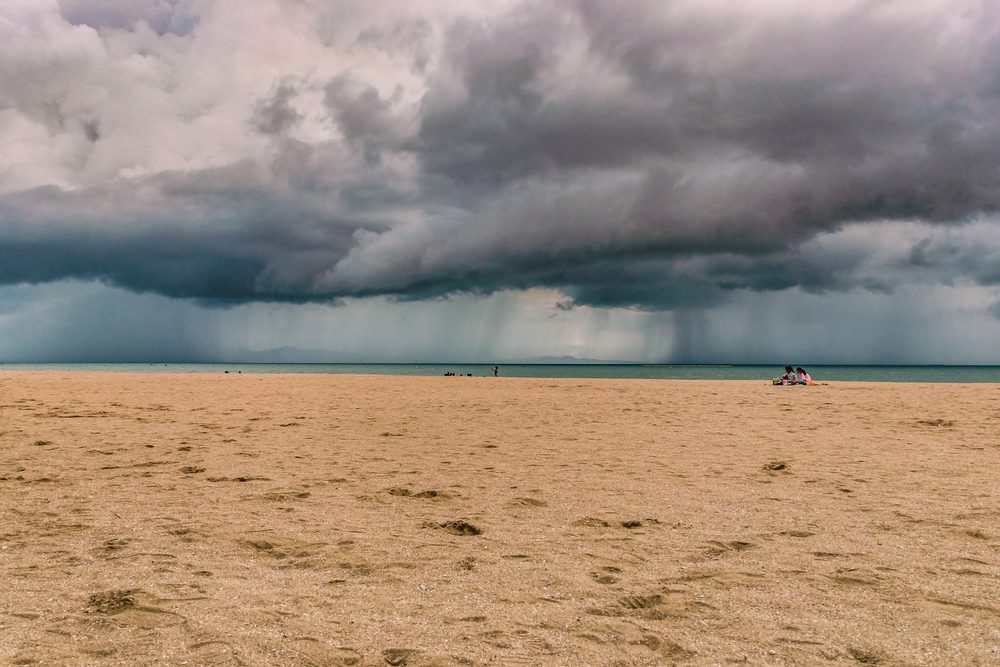
This is the abbreviated form for an isolated high level depression, colloquially known as a “cold drop“. It occurs when cold air moves over warm waters. Due to the sudden change in temperature, warm, moisture-laden air at sea level rises at high speed, forming water-laden storm cells.
It is a phenomenon that occurs every year in certain areas of the Mediterranean, and also tends to ‘splash’ Malaga.
Floods in Malaga
The disastrous DANA that occurred in October 2024 made international headlines for the large number of fatalities it caused in Valencia.
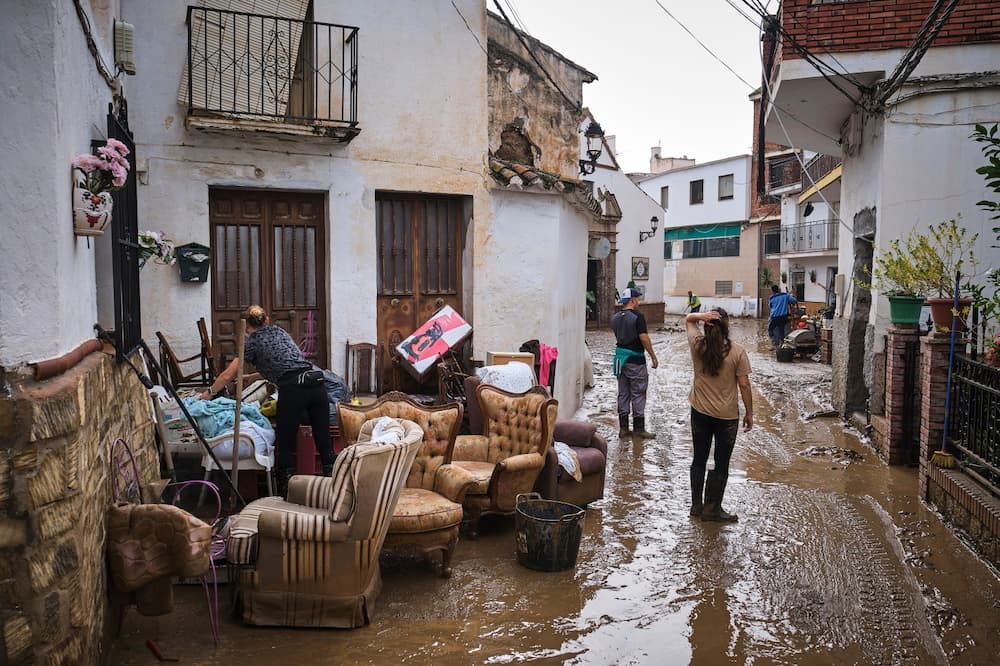
In Malaga, thousands of people were evacuated and flooding affected part of the airport, the Malaga clinical hospital and the Maria Zambrano station. At Malaga-Costa del Sol airport, large pools of water formed in the arrivals terminal, air traffic was affected and the taxi service was completely suspended.
On the other hand, there were also several tornadoes. One of them, registered in Mijas, forced people to take shelter in a petrol station. The tornado completely destroyed the terrace and the car wash.
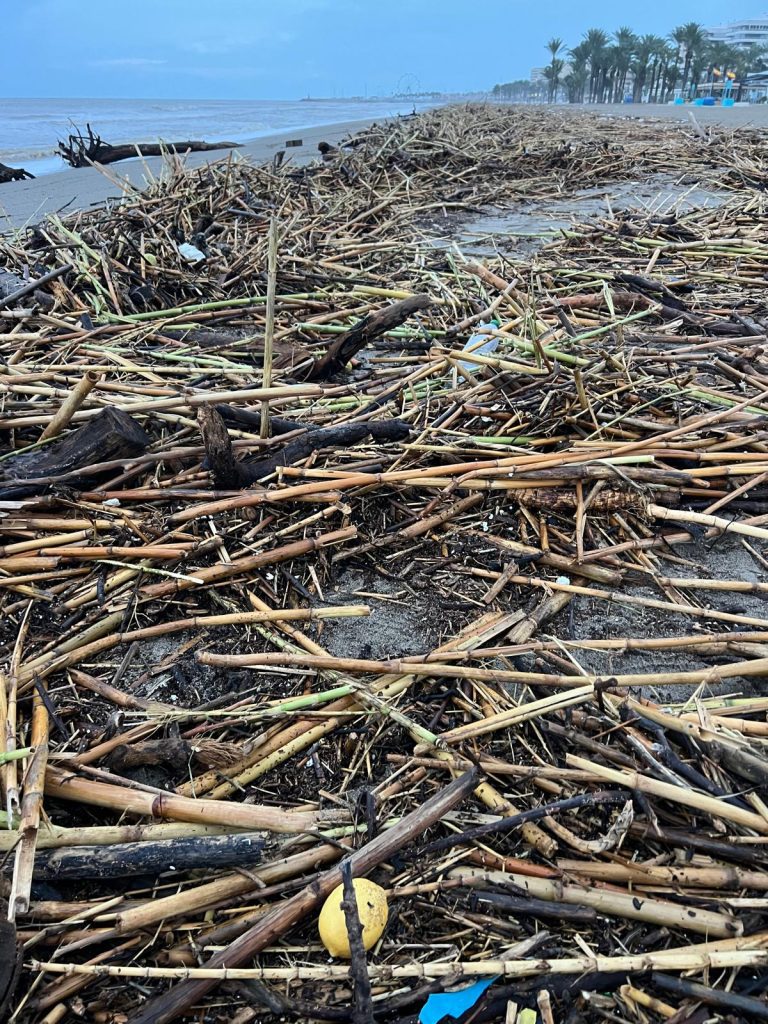
What months does it rain the most in Malaga?
The most rainfall occurs between the end of October and March. In summer it hardly rains at all. DANA or ‘cold drops’ can occur throughout the year, but are most likely to occur in late summer and early autumn.
How to protect your car in severe weather
Severe weather warnings
We remind you of the bad weather warnings:
- Orange: There is an important meteorological risk. Unusual weather phenomena and with a certain degree of danger for the usual activities. Take precautions.
- Red: Extreme weather risk. Unusual weather phenomena of exceptional intensity and with a very high level of risk to the population. Do not travel unless strictly necessary.
Tips for driving in heavy rain
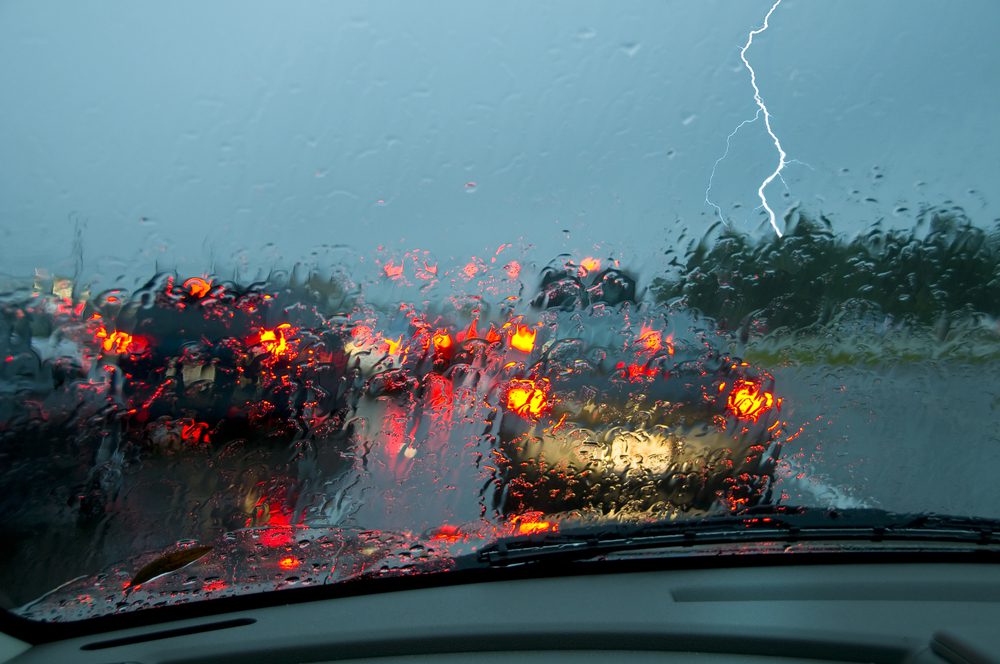
- Reduce speed and increase the safety distance to the vehicle in front.
- Drive in high gears. This prevents wheelspin and loss of control.
- Switch on dipped headlights. Never use high beams, as they will reflect off raindrops and prevent you from seeing clearly.
- Avoid puddles. We don’t know how deep they are or if there are any potholes.
Tips for driving in a thunderstorm
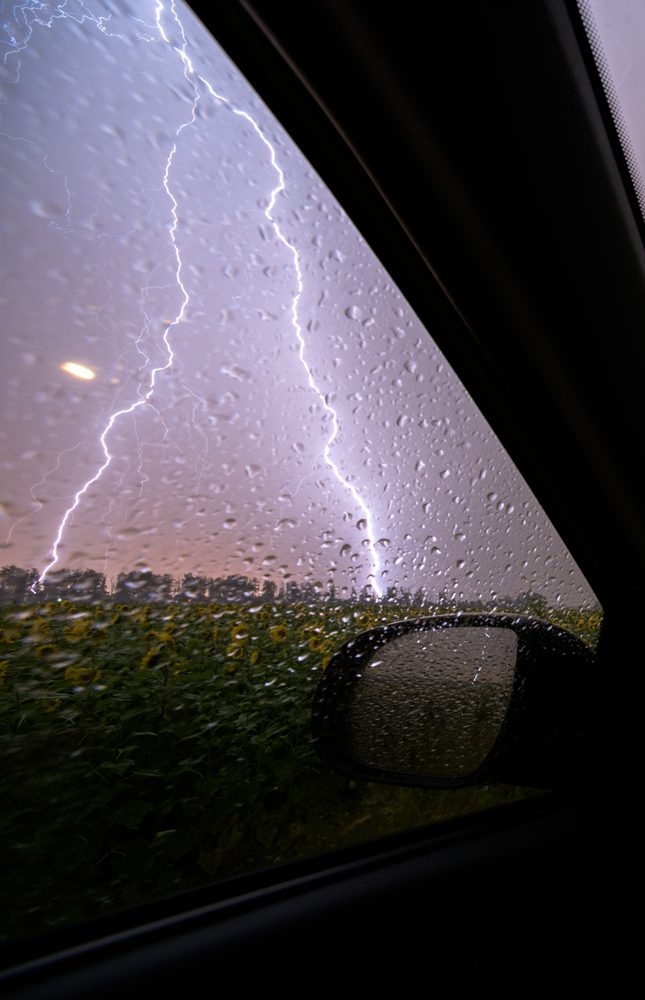
According to the Spanish Meteorological Agency, an average of 1,300,000 lightning strikes per year in Spain, claiming between 10 and 15 lives each year.
During a thunderstorm, a car is actually a very safe place to be if you take into account the following tips.
- Avoid stopping in high mountainous or open, unpaved areas, under trees, metal fences, water hazards or power lines.
- Try to stop in a safe place such as a service area.
- Do not get out of the car until the storm stops, close the windows and turn off the radio.
- Do not touch metal parts of the car, to avoid receiving electric shocks.
Tips on how to act during floods
Floods occur very quickly and are very, very dangerous. When a large amount of rain falls on the ground in a short period of time, it does not have time to absorb it. The water will find the easiest way to follow its path, i.e. streams and riverbeds.
Here in Malaga we have many of these watercourses that are dry for most of the year. They become raging rivers in a matter of minutes.
- Never park next to a river or a dry riverbed.
- Do not park your car in an underground car park.
- Park your car on high ground. Google Maps has a ‘Terrain’ layer (next to Satellite), so you can see where the highest ground is.
- Alternatively park in a multi-storey car park building.
- If you really need to make a journey, plan an alternative route on roads that are higher up.
If you come across a flooded area, our advice is to avoid driving through it. If you think you have no other option, follow these tips:
What depth of water can a car drive through?
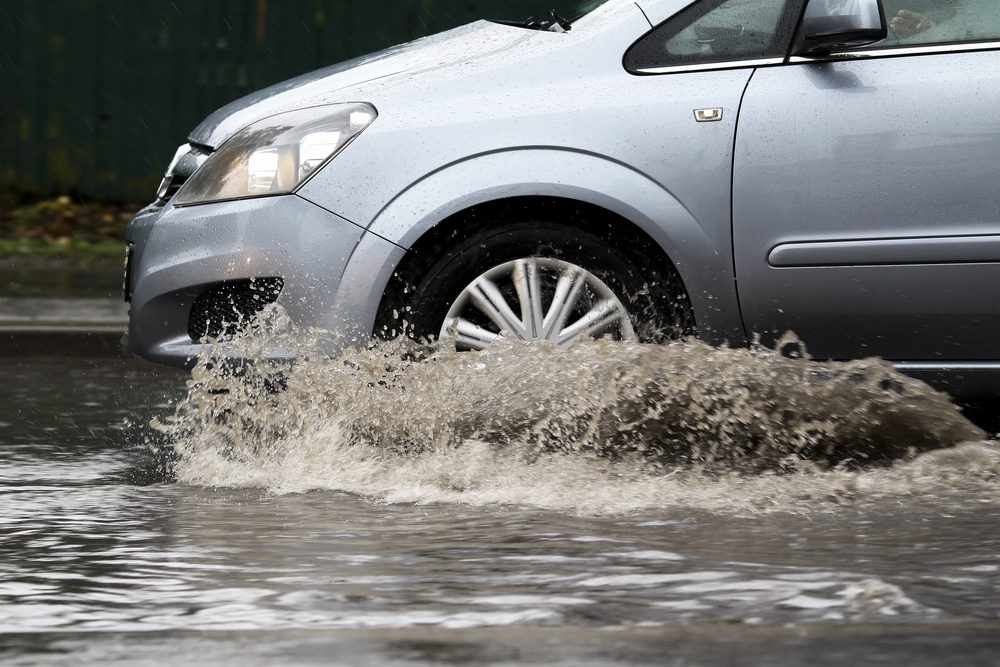
It is generally not advisable to drive through water deeper than 10 cm, unless you have a 4×4 that is slightly higher than the average vehicle.
Avoid passing through stagnant water
We cannot know the depth of standing water, even if it is a road we drive on every day.
The car may stall in the middle of the puddle and then you probably have no way out. If you drive an electric car, the worst thing you can do is drive through a pool of water. Therefore, always avoid driving through standing water and look for an alternative route.
Keep in first gear
When approaching a flooded part of the road, engage first gear and drive very slowly. Entering the water too quickly can cause the car to aquaplane.
If your car stalls in the middle of a puddle
If your car stalls in the water, start it as quickly as possible before the water seeps into the engine.
If you get stuck in a flood
If your car gets stuck in the flood and the water is rising, it is best to abandon it and get out. Fast water is very powerful, and your car could be swept away by the current and become a death trap.
Electric car trapped in fast rising water: Windows down! The most likely thing to happen when water enters is that the car will stop. The moment it stops, you won’t be able to roll down the windows. In the Valencia tragedy, many victims were found drowned in their own cars as they had not been able to get out.
Just 30 cm of running water might be enough to move your car. 60 cm of standing water will float your car.
If you need to get out of the vehicle
- Beware of slip and trip hazards, such as underwater kerbs.
- Be aware that drain covers can lift and move.
- Water levels can change rapidly. As little as 15 cm of flowing water can knock you off balance and be enough to make you unable to regain your balance.
- Be aware that flood water is contaminated.
Official App of the State Meteorological Agency for mobile phones
Do you want to know where it will rain or if adverse weather phenomena are forecast during your stay in Malaga and the Costa del Sol?
We recommend this official app from the State Meteorological Agency with accurate, detailed and constantly updated information.
If you have geolocation activated, the app shows the weather forecast for the municipality where you are located. It is also possible to obtain the forecast through a simple and quick search engine. You will be promptly informed of adverse weather phenomena in your favourite municipalities if you keep notifications activated.
Trip cancelled due to adverse weather?

Can I get a refund if I decide not to travel because of the floods?
Unless the Ministry of Foreign Affairs of your country of residence advises against non-essential travel to Spain, the normal booking conditions apply.
In other words, travel remains in effect. If you decide to request a cancellation of your holiday, it is considered a ‘waiver of travel’. Therefore, you cannot expect a refund.
Am I covered by my travel insurance?
If your policy includes cover against natural disasters and you are unable to reach your holiday destination due to adverse weather, then you should be able to get your money back.


 Tips for a safe holiday in Malaga
 Things you should never do on Malaga’s beaches
 Refreshing ideas to combat the summer heat and Terral in Malaga