In search of Tartessos — Huelva, the Guadalquivir and La Janda

The Greeks wrote of Tartessos as a rich kingdom at the far end of the Mediterranean, already in contact with Phoenicians and, in their telling, with a memory of Egypt. Archaeology has since shown a real culture in what is now Huelva, Seville and Cadiz: silver and copper, painted pottery, graves, warehouses under later cities. What has not been found is the capital they described as a single shining town.

That gap is why the trail is still worth walking. Some writers fold Tartessos into the older riddle of Atlantis in Andalusia. You can take that leap or stay with the dirt: the mouth of the Guadalquivir at Sanlucar, the meeting of the Tinto and the Odiel under Huelva, and the Barbate flats of La Janda, a day’s march from the Strait. Related pages: Huelva, Cadiz, Seville, Sanlucar de Barrameda.

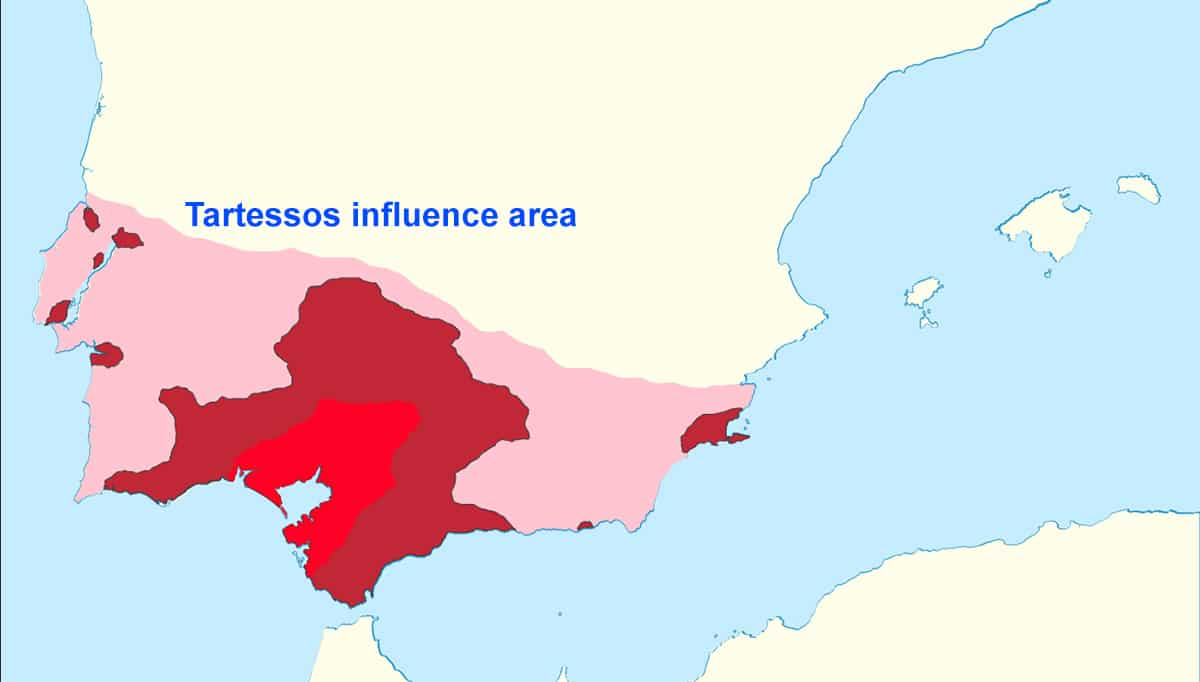
Map of the Tartessian area in western Andalusia

*Tartessos is a documented culture. The exact city remains an open question. Museums hold the objects; the landscape holds the argument.

Words you will meet

  • Tartessos — the name Greek writers used for a kingdom and a river in south-west Iberia, and the name archaeologists now use for the culture of the 8th–6th centuries BC in this corner of Andalusia.
  • Phoenicians — sailors from the Levant who settled Gadir (Cadiz) and traded for metal. Tartessos grew in that contact, not in isolation.
  • Pillars of Hercules — the Strait of Gibraltar in Greek geography. Distances in the old texts are measured from here.

Landscape sometimes linked to the Tartessos and Atlantis debate

Huelva: the strongest ground

If you want objects, start here. Under modern Huelva, at the meeting of the Tinto and the Odiel, excavations have turned up Tartessian-period warehouses and graves. The provincial museum keeps the finds. A Greek snippet attributed to Scymnus says Tartessos lay two days’ sail from Gades (Cadiz); Huelva fits that line better than some other guesses, and contradicts others. That is the state of the argument: a good fit, not a plaque on a palace.

The Rio Tinto mines inland are part of the same metal story. Ancient workings in this belt fed the trade that made the coast rich. The nineteenth-century dock on the river is a later chapter; stand there for the water and the light, then go back to the museum for the centuries that matter on this page. Palos and the caravel quay belong to Columbus, not to Tartessos. See them if you are already on the estuary.

  • Huelva archaeological area — map
  • Rio Tinto dock — map

Sanlucar and the mouth of the Guadalquivir

Greek geographers put a great river in Tartessos. The Guadalquivir is the candidate most people still walk. Sanlucar de Barrameda sits at the mouth. No Tartessian street plan has been dug here. What you get are earlier and later clues: Copper Age ground at Cortijo de la Fuente, the Treasure of Ebora from an abandoned farm, the Treasure of the Algaida — now in the Cadiz museum — from a sanctuary by the pine wood, later dedicated to Venus. The Well of the Caveros still holds water in the Pinar de la Algaida.

Popular books like to split the town’s name into “holy place” or a temple to the sun. That is etymology as atmosphere, not a floor plan. Walk the estuary, the pine wood and the museum in Cadiz. The manzanilla and the seafood are the living town. They are not evidence of a lost temple.

  • Cortijo de la Fuente — map
  • Site of the Treasure of Ebora — map
  • Pinar de la Algaida — map
  • Museum of Cadiz — map

La Janda and the Barbate

Another school puts Tartessos on an island in the Barbate, inland from the coast toward Benalup and Medina Sidonia. The case is a line in the old books: a day’s walk from Tartessos to the Pillars. La Janda is about forty kilometres from the Strait; the Guadalquivir mouth is much farther. Until someone digs a city, that is a ruler on a map, not a ruin.

What you can visit is the drained lagoon of La Janda — once the largest wetland on the peninsula — the Roman site at Canos de Meca, the cork hills of Los Alcornocales, and the shore at Zahara de los Atunes. The landscape explains why people keep looking here. The beach does not prove the kingdom.

  • Old lagoon of La Janda — map
  • Canos de Meca archaeological area — map
  • Los Alcornocales — map

The Guadalquivir toward Seville

Upstream the river becomes the valley the Greeks loaded with myth. Heracles, in that telling, tore Europe from Africa and left a pillar on each side of the Strait; he drove the cattle of Geryon out of these marshes. The Garden of the Hesperides was placed here too. Those are stories. The ground under them is the same metal-and-mud culture you meet in Huelva.

Seville’s own legend names Heracles as founder. For Tartessos the useful stop is the archaeology of the lower valley and the objects in the city’s museums — goldwork of the sort found at El Carambolo, on the Camas side of the river. Read the labels. Then stand on the bank and see why a river this wide kept appearing in other people’s books.

Where was the capital?

Nobody has a closed answer. Huelva has the densest Tartessian finds. Sanlucar has the river mouth the Greeks seem to describe. La Janda has the walking distance to the Strait. Follow all three if the question has you. Then argue it on the blog if you like.

How to follow the Tartessos trail

Huelva, Sanlucar and the Cadiz shore are a westbound trip from the Costa del Sol. Seville sits in the middle of the river argument. Do not try Huelva, La Janda and the Cadiz museum in a single afternoon.

Car hire

Car hire: the flexible option

The way to see the Tinto–Odiel estuary, Sanlucar and La Janda as three separate landscapes instead of one rushed motorway day.

Hire a car at Malaga Airport
Private transfer

Taxi or private transfer

From Malaga Airport or the Costa del Sol to a hotel in Huelva, Sanlucar or Seville. Stay the night. The clues are in different provinces.

Book a transfer

*No credit-card details or advance payment are needed to request a quote. Cancellation is free. Book ahead in high season to avoid price rises and to secure the car or group size you need.

Other options

Trains and buses serve Huelva, Seville, Cadiz and Sanlucar. A local taxi covers the Algaida pine wood or a site outside town. La Janda and the inland tracks are easier with a car.

Practical tips

  • Begin with a museum: Huelva for the city finds, Cadiz for the Algaida treasure. Then walk the landscapes those objects came from.
  • Treat Sanlucar, Huelva and La Janda as three hypotheses, not three suburbs of the same lost street.
  • Rio Tinto, Palos and the caravels are worth a Huelva day. They are not Tartessian ruins.
  • If the Atlantis comparison interests you, keep it as a question. The dated layer you can touch is Tartessos.

Frequently asked questions about Tartessos

Has the city of Tartessos been found?

No. The culture is well attested. The capital the Greeks described has not been pinned to one street plan.

Is Tartessos the same as Atlantis?

Some writers think the Greek Atlantis story used a memory of this coast. That is a theory. Tartessos can be visited through museums and sites without settling it.

Where should I start?

Huelva, if you want the densest finds. Sanlucar, if you want the river mouth. La Janda, if you want the distance to the Strait.

What can I actually see in Sanlucar?

The estuary, the Algaida pine wood and nearby prehistoric ground. The best of the metalwork from this shore is in the Museum of Cadiz.

Did the Phoenicians found Tartessos?

They founded Gadir and traded for metal. Tartessos was the local power that grew with that trade, not a Phoenician suburb with another name.

Do I need a car?

Huelva, Seville, Cadiz and Sanlucar work by train or bus. A car is how you add La Janda and make excursions more comfortable at your own pace.