
Winter has officially begun. Given that the Costa del Sol is the warmest and sunniest spot in Europe, you might be surprised by this article about winter traffic fines in Malaga.
The DGT (Spanish Directorate General of Traffic) is stepping up its controls during the winter months and warning of infractions that many may not even be aware of, with fines ranging from €80 to €200. From driving a dirty car to wearing a coat: these are traffic fines that almost no one knows about, but they really do exist. We’ll tell you more below!

- No refuelling fee
- Free cancellation
- Hire without intermediaries
- Pay when you pick up your car

Malaga in Winter
You probably already know this. In Malaga and the Costa del Sol, winter as it’s traditionally known in the rest of Europe is practically nonexistent. We go straight from autumn to spring.
However, Malaga does have its own “winter” with various local phenomena or due to strong storms from the north.
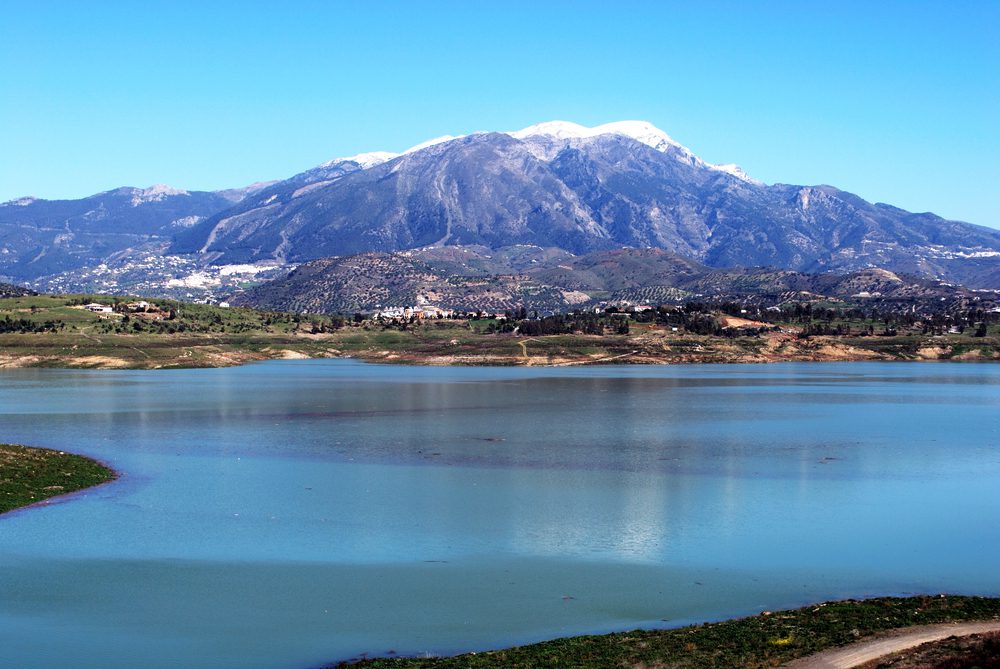
Malaga is also occasionally affected by polar air masses. These bring not only much-needed rain to the fields, but at higher altitudes, it falls as snow.
Although not as frequent, it’s not unheard of either. And it always attracts many locals eager to see landscapes blanketed in white.
Is there snow in Malaga?

Although it is almost impossible for it to snow in Malaga or on the coast (as in that extraordinary winter of 1954), the highest mountains of Malaga are covered in white every winter, offering a unique landscape that attracts hikers and nature lovers.
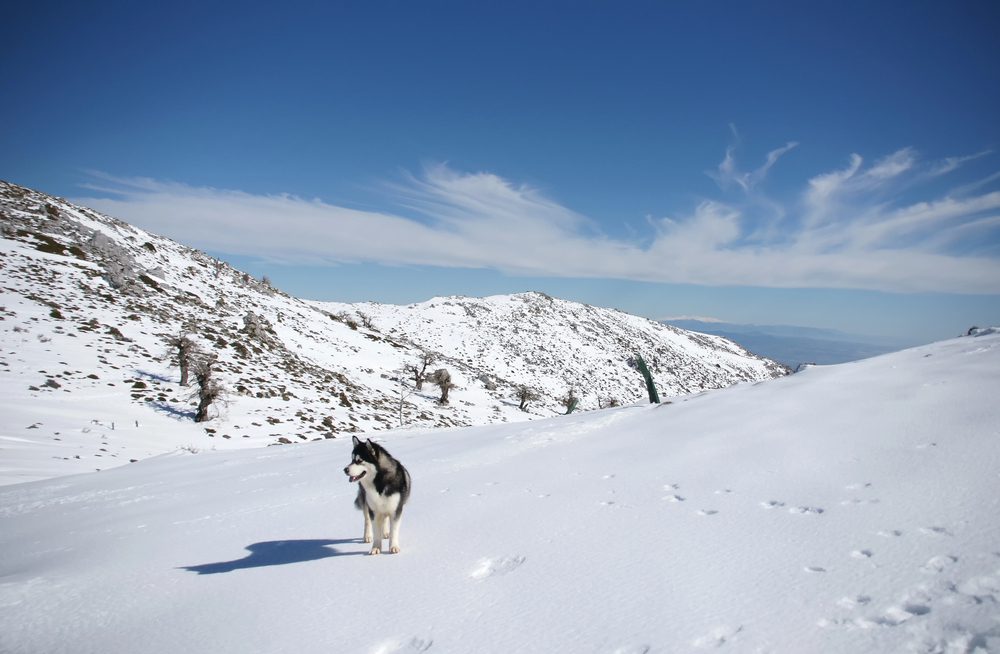
The major storms that occur between November and February each year typically leave snowfall above 1,500 metres. There have also been winters when the snow level dropped to as low as 800 metres.
The highest mountain ranges in Malaga that turn white are:
- Sierra Tejeda and Almijara in the Axarquía region (eastern Costa del Sol)
- Sierra de las Nieves National Park (as its name suggests, “Snowy mountain range”)
- Sierra Bermeja of Estepona
- El Torcal de Antequera
- Malaga Mountains
Why is there sometimes fog in Malaga that makes it look like London?
This is a truly unique phenomenon in Malaga, known as Taró. It occurs when warm air cools over the Alboran Sea, creating a dense layer of fog that lowers the temperature and reduces visibility.
Interestingly, this phenomenon also occurs in summer, sometimes even forcing the raising of red flags on beaches.
These fog banks can last all day and affect large areas, significantly reducing visibility.
Winter fines in Malaga
In the previous section we told you a little about our climate in Malaga. We can also add that the subjective feeling of cold that each person experiences is literally – subjective.
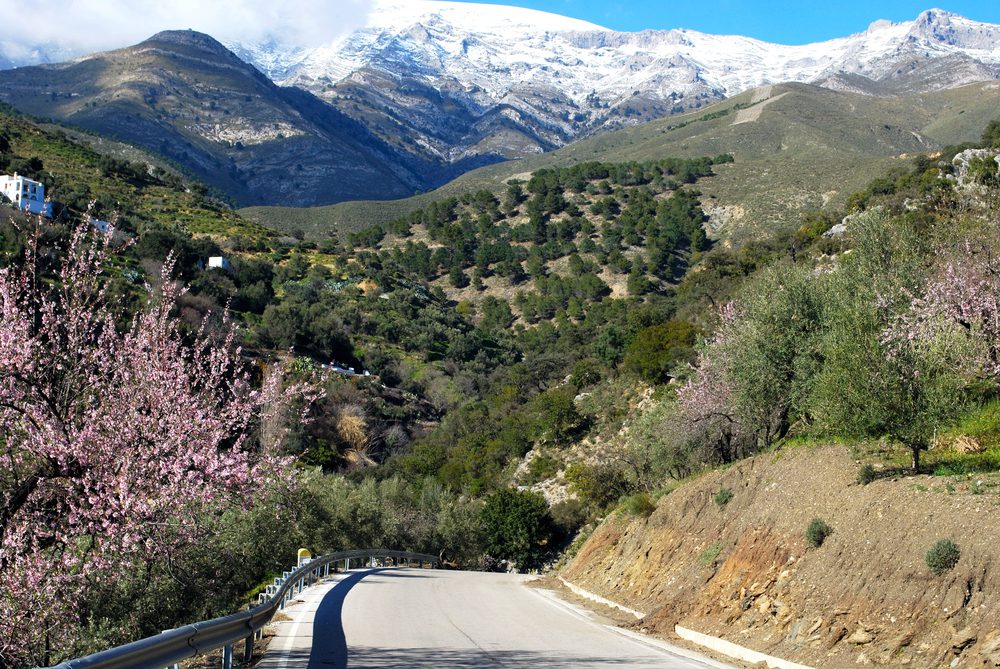
It’s very common to see people in the streets dressed in all sorts of outfits. While visitors from northern regions can finally shed their heavy coats and enjoy spring-like temperatures, the people of Malaga are freezing. With daytime temperatures between 12 and 18 degrees Celsius in the middle of winter, they wear boots, coats and even scarves.
Why are we telling you all this?
Because the first fine might seem like a joke, but it’s not.
Driving with a coat that restricts movement

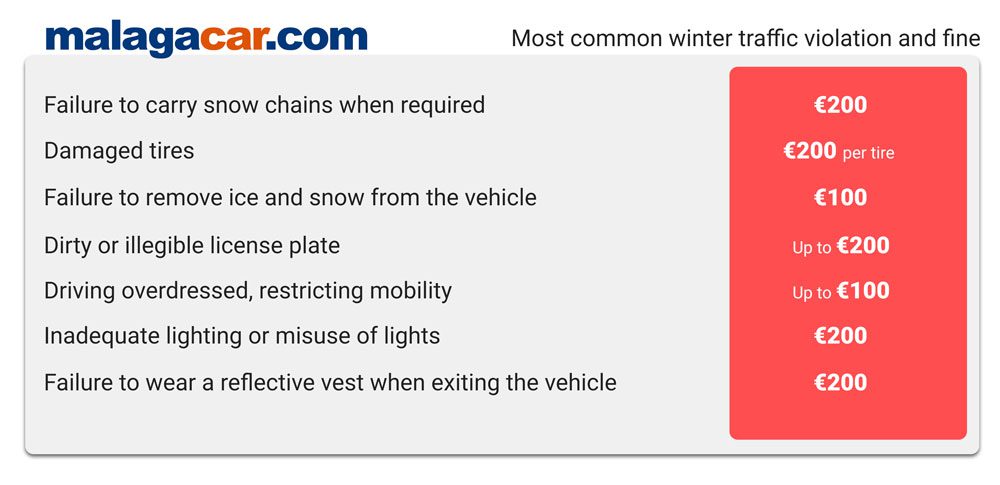
One of the most common fines: Driving with a coat that restricts movement. If you wear a bulky coat that hinders your movement and doesn’t properly secure the seatbelt, you could face a fine of up to €200. The recommendation is to keep the car interior between 20 and 25 degrees Celsius while driving, and to do so without a coat.
Windscreen and plate
When you’re driving, the windshield must not be dirty, fogged, or covered in a way that obstructs your view. You have been up in the mountains to see the snow? Before moving a vehicle, remember to completely remove any ice or snow from the windshield, windows and roof.
The license plate must be visible and legible, without mud, snow, or stickers obscuring it. If the officer checking you believes you’re not complying with these regulations, you could face a fine of up to €200.
Snow chains
It seems ridiculous in Malaga, doesn’t it? But as we mentioned before, it often snows at higher altitudes. If you plan to enjoy the snow in the Malaga mountains, remember to bring snow chains.
Regular tires don’t grip well, and you could find yourself in situations on secondary roads where moving the car can be extremely difficult and even dangerous. If you don’t use snow chains in these weather conditions, the fine can reach €200.
Driving with worn tires
The minimum legal tread depth for tires is 1.6 mm, although 3 mm is recommended. Failure to comply with this depth can result in a fine of up to €200 per tire.
Also, remember that while it rarely rains in Malaga, when it does, it often falls in large quantities in a very short time, creating dangerous puddles and hydroplaning. We have a special article prepared for adverse weather conditions that you might find helpful.

Proper use of headlights
Remember to turn on your fog lights when there’s fog in Malaga. And don’t dazzle other drivers with your high beams. The fine in both cases is €200.
Minimum safety distance
When roads are more challenging due to water, ice, and snow, remember to maintain a minimum safety distance:
On a dry road, driving at 90 kilometres per hour, the safe following distance is 81 meteres. On a wet road, the safe following distance should be 162 metres. Does that seem excessive? Anyone who fails to maintain a safe distance faces a fine of €200 and the loss of 4 points on their driving licence.
Driving with worn-out wiper blades
Driving in the rain with worn-out windshield wipers that impair visibility carries a fine of €80.
Driving without headlights
Many cars today have automatic daytime running lights. However, we still occasionally see cars driving withoit lightd in the dark because the drivers forgot to turn them on. Driving without lights when required is a serious offense that carries a €200 fine.
Furthermore, in the event of an accident, if it is proven that the car was driving without lights due to driver negligence when they are mandatory, the insurance company could refuse to cover the damages.
What about the new V16 warning light?
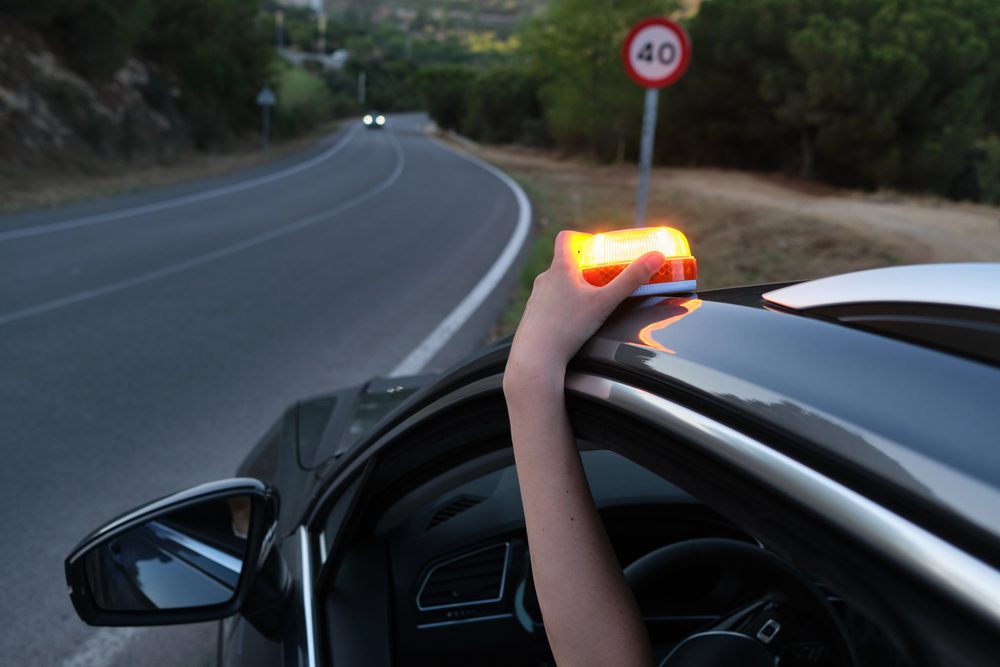
From January 2026, it will be mandatory to use the V16 beacon to signal emergency or hazardous situations on the road. In case you didn’t know, Spain is the only European country with this new regulation, which, incidentally, is generating a lot of questions regarding its use.
From 2026, the warning triangle will be permanently phased out and replaced by the V16 beacon. The reason is safety, as drivers currently have to walk many metres along the hard shoulder or even the roadway to place them correctly.
According to the DGT (Spanish Directorate General of Traffic), fines for not using or carrying the beacon will be up to 80 euros. Similarly, leaving the car without a reflective vest carries a fine of 200 euros and a four-point deduction from the driver’s license.
Who doesn’t need a V16 warning light in their vehicle?
There will be exceptions for road users who will not be required to use the V16 beacon:
- Motorcycles and bicycles.
- Cars registered in European Union countries (may continue to use the warning triangle).
You also might find interesting…
- Low Emission Zone Malaga – Everything you need to know
- Spend the winter in Malaga – Sunshine guaranteed!
- Great ideas for Day Trips in Malaga in autumn & winter


 A once in a lifetime experience: Solar eclipse in Malaga!
 Midsummer Night in Malaga 2026: Everything you need to know
 Medical emergency in Malaga – Everything you need to know