Cadiz: Fascinating History, Diverse Regions and Dream Beaches on the Atlantic Coast
The province of Cadiz can be divided into different regions, each with its own tourist attractions and places worth visiting. The centre of the province is largely devoted to agriculture and includes several important towns, among which Jerez stands out, internationally renowned for its wines, horses and racing circuits.
Discover Cadiz through this informative video
In addition, Cadiz offers a blend of millennia-old history, natural landscapes and a gastronomy rooted in seafood, making it a versatile destination for all types of travellers.
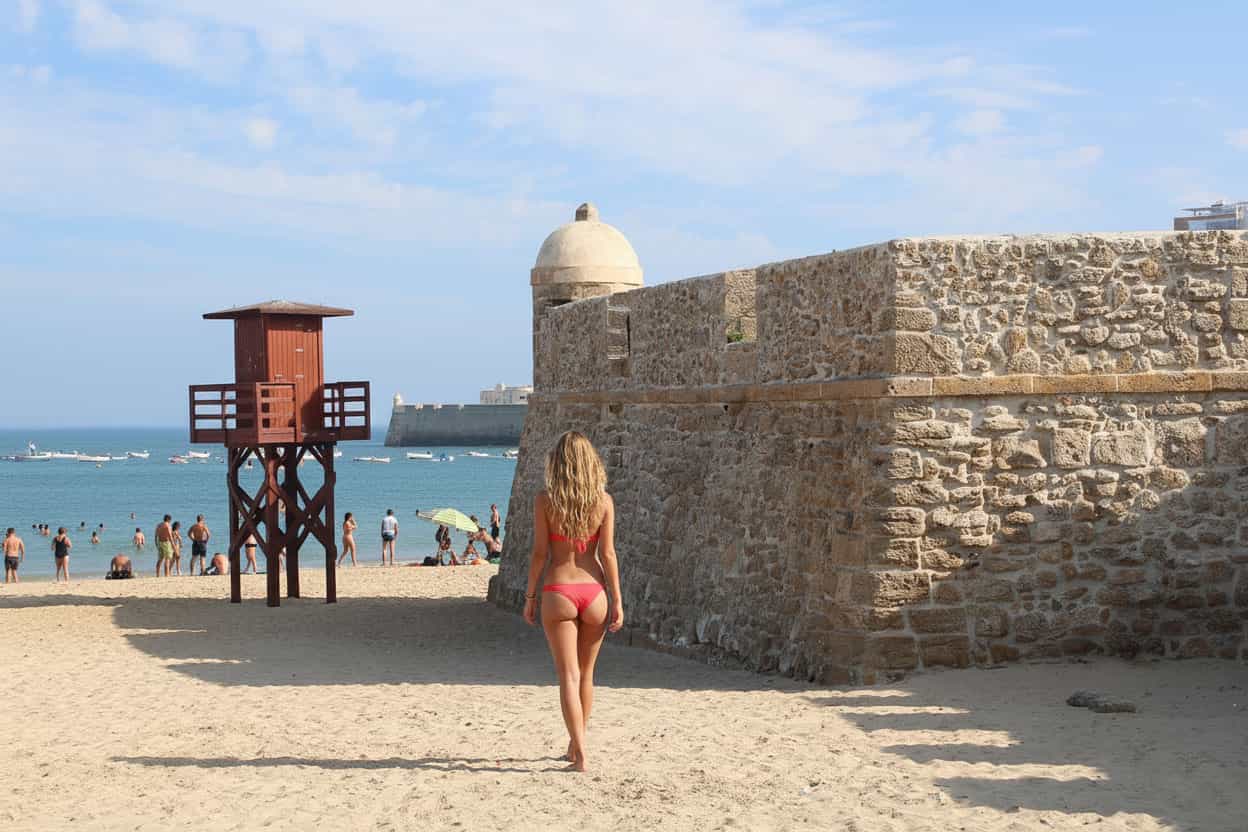
One of the many beaches offered by the province of Cadiz
History of Cadiz: From the Phoenicians to the Modern Era
The province of Cadiz is relatively young; it was established on 30 November 1833 from localities belonging to the Kingdom of Seville, Huelva and the Kingdom of Granada. Although the province itself is recent, evidence of human settlement and passage dates back to prehistoric times.
Around the 9th century BC, the first known settlements were established by Phoenicians and Tartessians, who founded colonies and factories, exploiting the province's natural resources. These early centres formed the present-day towns of Puerto de Santa Maria, Medina-Sidonia and Gadir (Cadiz).
During the Roman period, trade focused on exporting wine, oil and wheat. The area was of great strategic importance and was even linked to the Via Augusta, one of the principal roads of the Roman Empire.
Following the arrival of the Arabs in the south of the peninsula in 711, Sidonia and al-Yazirat emerged – today Medina-Sidonia and Algeciras. Western Andalucia was among the first areas to fall to the advancing Christian armies, and by 1264 it had been fully reconquered, with much of the Muslim population expelled.
The pronounced cultural differences with the rest of Spain, combined with ongoing hardship that led to increasing poverty in the south, sparked an independence attempt originating in Cadiz known as the conspiracy of the Duke of Medina Sidonia. This coincided with Portugal's independence and the Catalan revolt but was uncovered due to betrayal.
Attractions in Cadiz Not to Be Missed
The province of Cadiz is divided into the following regions: Bahia de Cadiz, Campina de Jerez, Costa Noroeste, Sierra de Cadiz, La Janda and Campo de Gibraltar. Each offers unique experiences, from beaches to nature trails.
Strolling through the streets of Cadiz's historic centre
Cadiz Museum: Features three distinct sections – archaeology, fine arts and local culture. Located in Plaza de la Mina, it is one of the most visited museums in Andalucia. (Map)
Puerta de Tierra: An 18th-century monument displaying part of the old wall through which one entered the medieval city of Cadiz. (Map)
Cadiz Cathedral: Construction began in 1722 and was completed in 1838. (Map)
Roman Theatre: In Roman times Cadiz was a city of great splendour with around 80,000 inhabitants, making it one of the empire's wealthiest centres. Its theatre is the second largest in the world, after Rome's. (Map)
Bahia de Cadiz: Towns and Nature Park
The Bahia de Cadiz region comprises several towns: Chiclana de la Frontera, Puerto Real, Puerto de Santa Maria and San Fernando. It takes its name from the bay into which several rivers flow.
Historically these towns belonged to the Kingdom of Seville. The region is home to the Bahia de Cadiz Nature Park, rich in bird and fish species.
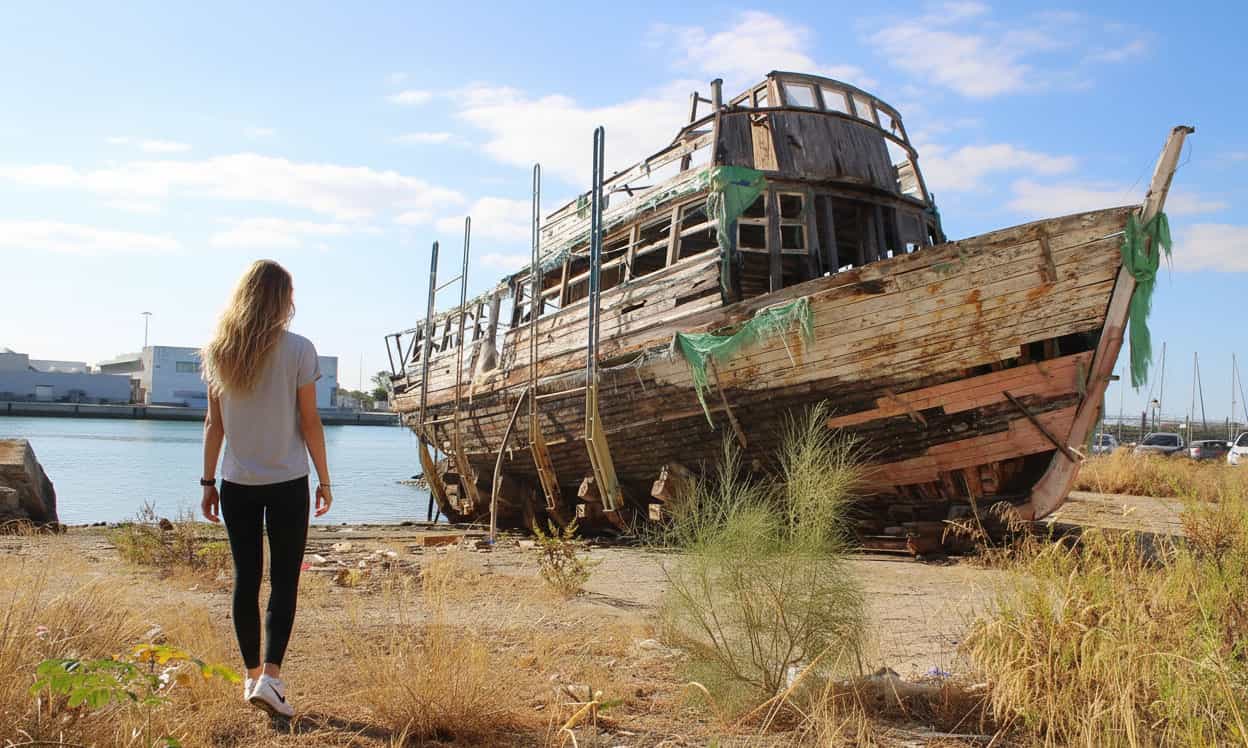
El Vaporcillo, an iconic old boat in Puerto de Santa Maria
Campina de Jerez: Wines and Population
The Campina de Jerez consists of San Jose del Valle and Jerez de la Frontera, famous for their wines and high population density.
Costa Noroeste: Marshes and Reserves
This region – Sanlucar de Barrameda, Trebujena, Chipiona and Rota – includes parts of the Marismas del Guadalquivir and a fishing reserve at the mouth of the Guadalquivir.
Sierra de Cadiz: Route of the White Villages
Also known as Sierra de Grazalema, it contains part of the Sierra de Grazalema Nature Park. In antiquity it belonged to the kingdoms of Seville and Granada.
Here you will find the Route of the White Villages (Ruta de los Pueblos Blancos), a tourist route covering many villages in the area and the Serrania de Ronda, offering stunning natural scenery and excellent traditional Andalucian rural cuisine.
La Janda: Beaches and Nature Park
This region offers visitors high-quality natural beaches. Part of Los Alcornocales Nature Park extends into La Janda.
The towns are Benalup, Conil de la Frontera, Medina-Sidonia, Alcala de los Gazules, Barbate, Paterna de Rivera and Vejer de la Frontera.
Campo de Gibraltar: Natural Beaches and Views
Comprising seven towns – Algeciras, Los Barrios, La Linea, San Roque, Tarifa, Castellar de la Frontera and Jimena de la Frontera – places like Tarifa are ideal for lovers of unspoilt and nudist beaches, with views across to the African coast while swimming in the sea.
Highlighted Destinations in Cadiz
Vejer de la Frontera: one of those charming white villages in Andalucia well worth a visit. If you are nearby and have a car, plan a stop to wander its streets and discover its cultural sights.
Puerto de Santa Maria: arguably the best place in Spain for seafood. At the mouth of the Guadalete River, this town boasts lovely tree-lined streets and renowned bodegas where you can sample some of the finest wines.
Canos de Meca: on the Costa de la Luz, offering beautiful beaches sheltered from the wind by cliffs and pine forests – a natural spot for enjoying pristine sands, pleasant weather and high-quality waters.
Conil de la Frontera: a former fishing village where you can savour excellent gastronomy, beaches and a relaxed holiday atmosphere.
Jerez: just 9 km from the Cadiz coast, it is the capital of the province's famous wine. Sherry enjoys worldwide fame, and its bodegas and equestrian shows make this originally Arab city a must-see.
Activities in Cadiz: Culture, Nature and Events
Cadiz is home to several nature reserves and parks, including Bahia de Cadiz, Marismas de Barbate, Donana, Los Alcornocales and Sierra de Grazalema, among others.
If you seek walking routes in nature, Cadiz provides a wide variety year-round.
The province's long history has left monuments, churches, buildings and archaeological remains well worth exploring. Its culture shines through numerous traditional festivals throughout the year, from the famous Cadiz Carnival to the Jerez fair (a lively Volksfest with temporary festbuden) and the celebrated horse races on Sanlucar beach.
Many visitors staying in Malaga in summer take a day trip to Tarifa beach – a place of outstanding natural beauty and one of Spain's finest.
Cadiz Carnival: Another major draw, with roots in Roman tradition, these carnivals have evolved but remain the most important in Spain and renowned worldwide.
Gastronomy: Seafood dishes are understandably the highlight, with fried fish shops and seafood cookeries common. Recommended plates include fried fish roe, prawns and seafood in general; provincial specialities feature onion-stewed tuna and fish meatballs.
The City of Cadiz: Western Europe's Oldest
The city of Cadiz stands out for its rich and varied history. In the Bahia de Cadiz region, it is Europe's oldest Phoenician foundation, with archaeological remains surviving over 3,000 years. Cadiz sits on an islet linked to the mainland by the Cano de Sancti Petri channel.
Known in antiquity as Gadir – Phoenician for fortress or walled area – it was the peninsula's most important city, hub for Mediterranean trade. Greek mythology links the name to Gadiro, first Atlantean king ruling Gadeira, a small archipelago in the bay. Some theories even propose Cadiz as Plato's lost Atlantis, located beyond the Pillars of Hercules (Strait of Gibraltar), supported by archaeological finds and historical accounts.
Hannibal is said to have departed from Cadiz to conquer Roman Italy, crossing the Pyrenees and Alps with a vast army. The city flourished under Roman rule, building amphitheatres and aqueducts for its growing population. After Visigothic conquest it entered a darker period, becoming a small walled town. Later controlled by Byzantines and then Muslims from 711 until 1264, when it was incorporated into Castile. Explorers like Christopher Columbus sailed from its ports during the colonial era.
Cadiz tourism benefits from excellent weather, coastal beaches, fine gastronomy and cultural heritage including popular festivals and historic monuments.
Beaches of Cadiz: Golden Sand and Atlantic Waters
Another major attraction is the beaches. With fine golden sand around the city, the following are particularly noteworthy:
These beaches suit everyone, from urban settings to wilder spots, connected to the rest of the province by coastal routes.
Getting Around Cadiz: Transport Guide
The province of Cadiz is well connected by road from Seville and Malaga via the Autovia del Mediterraneo. Arriving at Malaga Airport, you can hire a car and enjoy a comfortable drive while taking in the scenery. The route allows stops at charming villages and striking landscapes en route to Cadiz. Cadiz is also close to Jerez Airport, the province's only airport.
Access to the city is via Puerto Real or San Fernando roads. From Malaga, head towards Gibraltar, then take the route crossing Los Alcornocales Nature Park, passing Puerto Real and Medina-Sidonia before reaching Cadiz.
Alternatively, follow the coast past Tarifa, Zahara de los Atunes, Barbate, Vejer de la Frontera, Chiclana and finally Cadiz after San Fernando.
Cadiz railway station offers local, medium-distance services to Cordoba, Jaen and Seville (stopping at Jerez and Puerto de Santa Maria) and long-distance trains to Madrid.
There are no direct trains from Malaga; change in Seville (Santa Justa or Dos Hermanas).
The nearest airport is Jerez (35 km); Malaga is 255 km away.
You can reach Cadiz by bus (terminating at Cadiz bus station), ferry via the port, train or car. If holidaying in Malaga and fancy trying Cadiz seafood or Tarifa beach, it is well worth the trip. Should you need a vehicle, check our car hire prices or chauffeur-driven transfers to anywhere in Cadiz.
Cadiz main railway station, well connected to the rest of Andalucia
The rail line linking Cadiz and Seville stops at several towns and takes about two hours: Cadiz, San Fernando, Puerto Real, Puerto de Santa Maria, Jerez de la Frontera, Las Cabezas de San Juan, Utrera, Dos Hermanas and Seville Santa Justa.
The Algeciras-Granada line is noted for scenic beauty; the Cadiz-Jaen route stops at Cordoba, Andujar and Jaen.
Cadiz has three major ports: Algeciras (Spain's largest and key link to Africa), Bahia de Cadiz (important cruise and transatlantic stop) and Tarifa (historically fishing, now leisure boats and ferries to Ceuta and Tangier).
Tip: With no direct public transport from Malaga Airport to Cadiz, hiring a car is recommended for freely exploring the province's regions and beaches.
Car Hire: Explore Cadiz with Freedom
To discover Cadiz and its surroundings with complete independence, car hire from Malaga Airport is ideal. Drive the Autovia del Mediterraneo past Marbella and Estepona or take the coastal road via Tarifa and Conil. This allows visits to white villages, beaches and nature parks at your own pace, without relying on public transport timetables.
For comfort upon reaching Cadiz, a taxi or private transfer from Malaga Airport takes you straight to your destination. Perfect for groups or those preferring not to drive, letting you enjoy the scenery en route to beaches or towns like Jerez without luggage or parking worries.
*No need to enter credit card details or pay in advance. We recommend booking early to secure the best prices and availability.
Other Transport Options in Cadiz
Besides car and taxi, Cadiz has train and bus links, though none direct from Malaga Airport. Local trains and buses connect towns such as Jerez and Algeciras. Ports provide ferries to Africa or nearby destinations.
Visit our blog for more on the road trip from Malaga to Cadiz.Map of the province of Cadiz
Tourist Information for Cadiz
Tourist Reception Centre: Paseo de Canalejas, s/n, Cadiz.
Cadiz has a wide range of restaurants specialising in seafood and tapas. Places such as El Faro de Cadiz or La Candela are popular for fresh dishes and local atmosphere, though checking recent reviews is advisable to suit individual tastes.
Is it safe to walk around Cadiz at night?
Cadiz is generally safe for walking at night in tourist areas like the historic centre, but as in any city, caution is recommended in poorly lit spots and avoiding solitary walks late at night.
What activities are available in Cadiz during winter?
Winter in Cadiz is ideal for exploring museums, historic routes and local markets. Walks through parks such as Los Alcornocales remain pleasant thanks to the mild climate, complemented by cultural events like concerts or exhibitions.
How is public transport in Cadiz?
Public transport in Cadiz includes city buses and regional trains connecting the city to nearby towns. It works well for local trips, but a car offers greater flexibility for exploring the whole province.
Where should one stay in Cadiz?
Accommodation in Cadiz ranges from hotels in the historic centre to apartments near the beach. Areas like La Vina or Puerto de Santa Maria are recommended for proximity to attractions and amenities.