Chiclana de la Frontera: Beaches, History and Nature in the Bay of Cadiz
Chiclana de la Frontera lies in the Bay of Cadiz (Bahia de Cadiz), around 24 kilometres south of the provincial capital, Cadiz. It forms part of the well-known Andalusian wine route (Ruta del Vino de Andalucia) and boasts beaches of outstanding quality – making it well worth spending time exploring in depth.
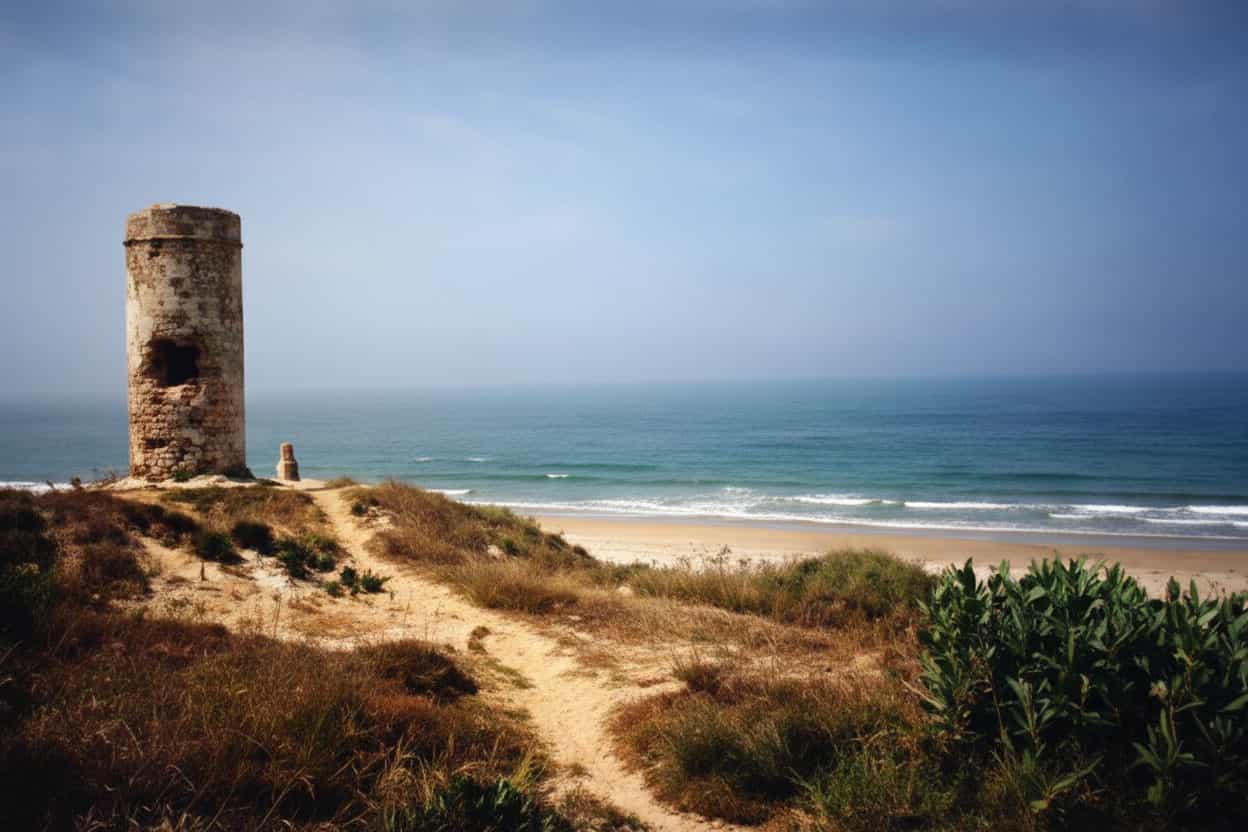
Beach in Chiclana with old watchtower
History of Chiclana de la Frontera
The earliest traces of settlement in Chiclana date back to the Neolithic period. Excavations in the town centre show that the Phoenicians established an important settlement here and built a temple to the god Melkart on the Isla de Sancti Petri – later known as the ‘Island of the Holy Stones’. The temple was destroyed in a rebellion in 1145, but its existence is recorded in anonymous texts from al-Andalus.
Later, the Castillo de Sancti Petri was built on the temple ruins. Chiclana is one of the cities founded more than 3,000 years ago by the Phoenicians – along with Cadiz, Sevilla and Malaga. Artefacts from this era can be seen in the Archaeological Museum of Cadiz.
After the Phoenicians came the Greeks and Carthaginians, until the Romans took control and repurposed the temple for the worship of Hercules. From the 4th century onwards, archaeological evidence is scarce, though it is known that Chiclana served as a frontier zone between Moorish and Christian kingdoms.
It was only after the Christian Reconquest that the town gained real importance. The discovery of America brought trade and prosperity, the population grew, and Chiclana became a favoured summer retreat for Cadiz’s upper classes. Much of the historic centre dates from the 18th century. Following the end of the Republic and during the Franco dictatorship, agriculture stagnated; the focus shifted instead to services and tourism, with hotels, apartments and golf courses.
Things to See in Chiclana de la Frontera
Chiclana offers monuments from various eras – from the Castillo de Sancti Petri to religious buildings, palaces, museums and unspoilt nature for those who enjoy the outdoors.
Among the highlights are:
Isla de Sancti Petri: island with castle and lighthouse. (Map)
Torre del Reloj: clock tower from the 18th century. (Map)
Torre Bermeja: defensive tower on Playa de la Barrosa. (Map)
Torre del Puerco: defensive tower from the 16th century. (Map)
Capilla del Santo Cristo: chapel from the 15th century. (Map)
Iglesia de San Juan Bautista: church from the 18th century. (Map)
Capilla de Santa Ana: chapel from the 18th century. (Map)
Museo de Chiclana: exhibitions on local history. (Map)
Museo de la Fabrica de Munecas Marin: doll factory since 1928. (Map)
Museo Francisco Montes Paquiro: dedicated to the bullfighter born in 1805. (Map)
Isla de Sancti Petri: History and Coastal Defence
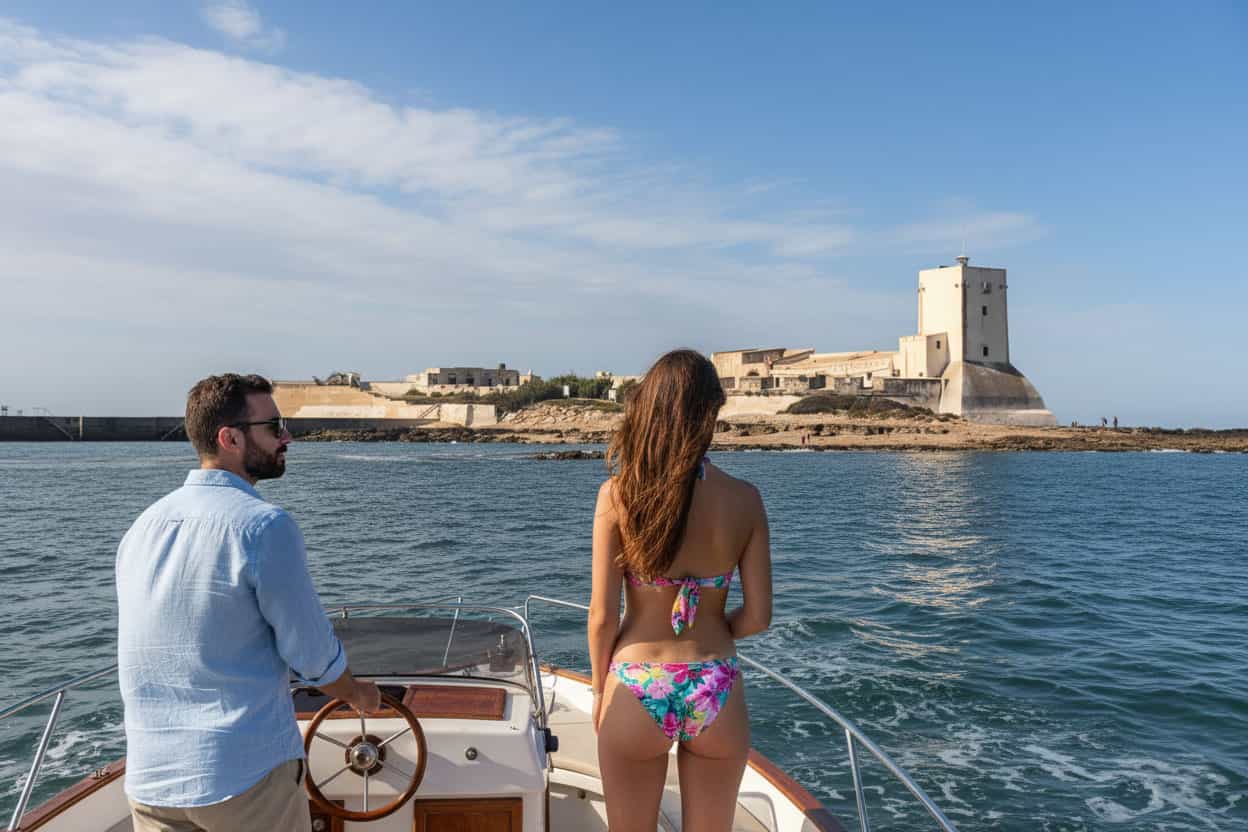
The Isla de Sancti Petri (‘Island of the Holy Stones’) takes its name from the ancient sanctuary to the god Melkart. Today the small island is home to the Castillo de Sancti Petri and the Faro de Sancti Petri, built in the 18th century to protect the coast from frequent pirate raids.
Boat trip to Isla de Sancti Petri
The earlier temple was famous; legends claim the bones of Hercules and relics of Greek heroes lay beneath it. Famous figures such as Hannibal and Julius Caesar are said to have visited and dreamed of world domination there. The present fortress dates from the 16th to 18th centuries (lighthouse from the 16th century). Access is by boat or kayak – with superb views over the Bahia de Cadiz nature park.
Torre del Reloj: 18th-Century Icon
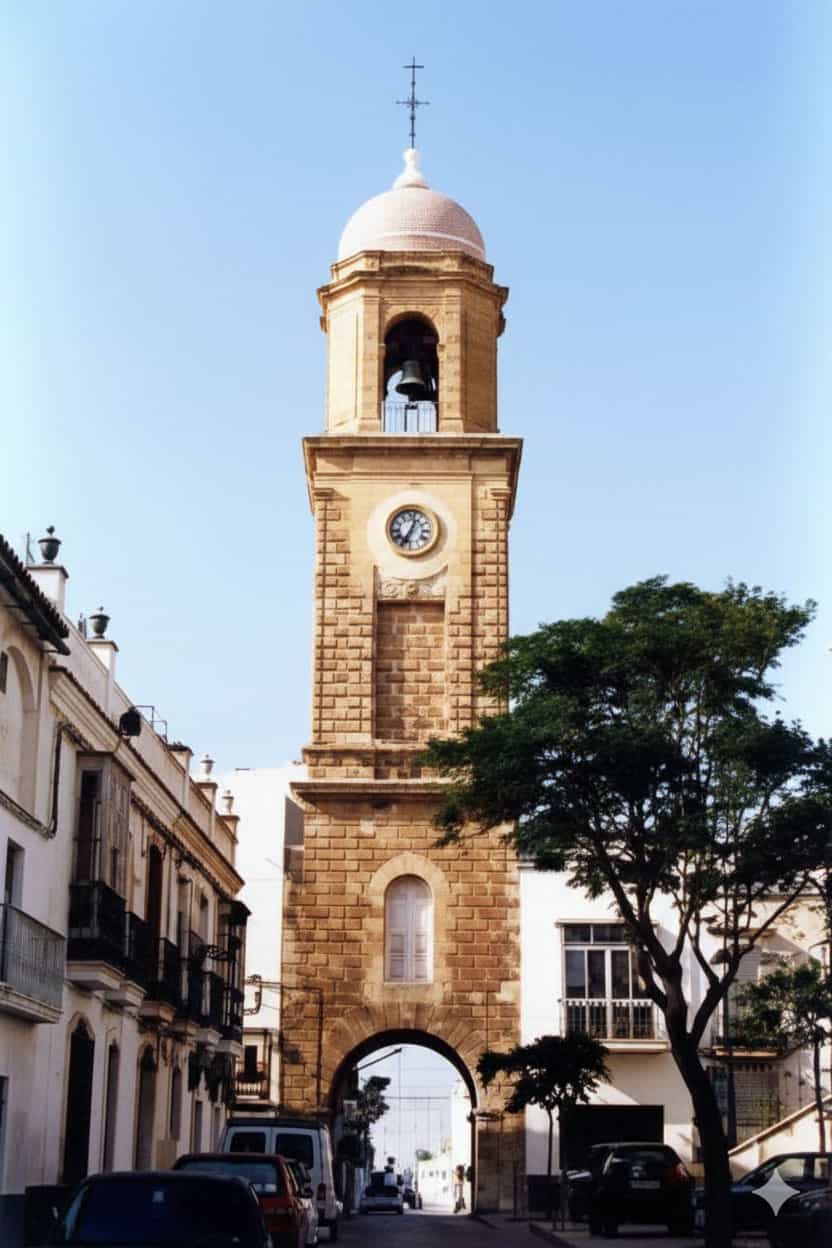
The clock tower was built between 1759 and 1764 on the remains of an old town gate that formed part of the former town hall (Cabildo). Known as Arquillo del Reloj, it stands 30 metres tall and once served as a bell tower for the neighbouring Iglesia de San Juan Bautista, although it is not a religious building.
Torre del Reloj in Chiclana
Since 1764 it has marked the hours of daily life in Chiclana and remains an integral part of the historic centre.
Religious Buildings in Chiclana
Chiclana has numerous churches and chapels – from the Capilla del Santo Cristo (15th century) to the Iglesia de San Juan Bautista and Capilla de Santa Ana (both 18th century).
Museums in Chiclana
The local museums focus on the town’s history, industry and notable figures.
Wines of Chiclana: A Millennia-Old Tradition
Wine production in Chiclana dates back to the 4th and 8th centuries BC. Many bodegas (wineries) welcome visitors and still follow traditional production methods.
Tip: Arrange a bodega visit – you can see the full production process and taste the local varieties on site.
Beaches of Chiclana de la Frontera
The beaches are the main draw: Playa de la Barrosa and Playa de Sancti Petri lie within a nature park and offer fine sand and largely unspoilt surroundings.
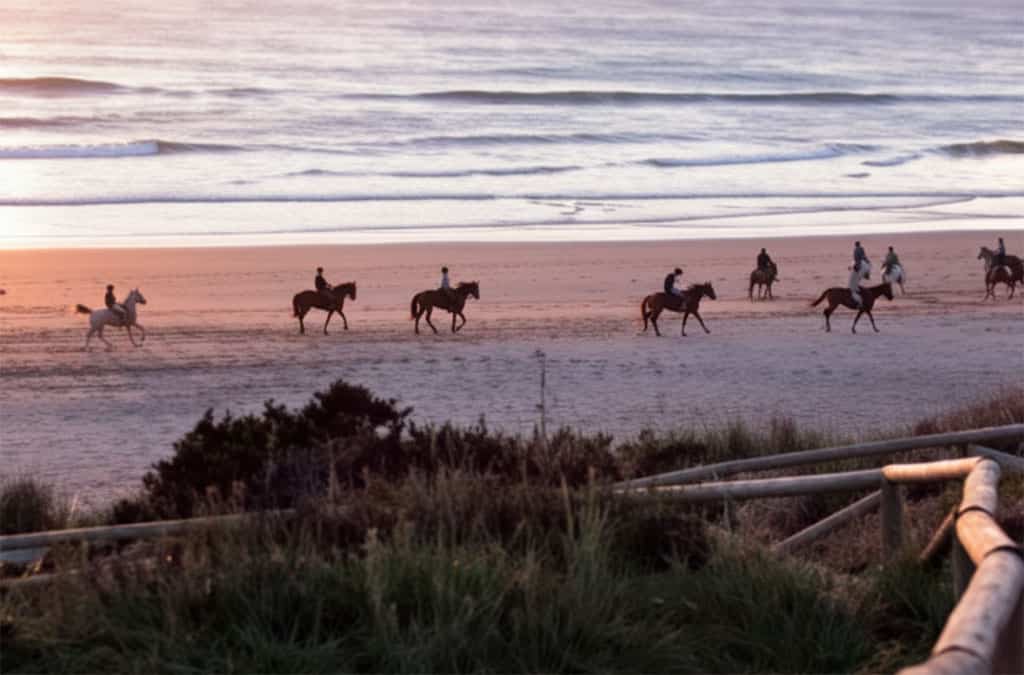
Horses on the beach in Chiclana
Playa de la Barrosa: urban beach, 60 m wide and 4 km long, with good facilities.
Playa de Sancti Petri: almost untouched, perfect for sunsets.
Playa de la Loma del Puerco / Novo Sancti Petri: peaceful, 45 m wide and 2.1 km long.
Playa de Lavaculos: tranquil, surrounded by vegetation.
Playa de Punta de las Piedras: secluded, 20 m wide and 1.4 km long.
Playa de Camposoto: set among dunes and pine forest.
From family-friendly beaches with promenades to wild stretches for complete relaxation – there is something for everyone.
Please respect access rules and nature protection measures to preserve the environment.
Golf in Chiclana de la Frontera
Chiclana attracts golfers with attractive landscapes and a mild climate. Several top-quality courses cater for beginners and professionals alike, with challenging layouts, fine views and excellent facilities.
Carnaval: introduced by the Romans and celebrated in a unique way across Andalucia.
Semana Santa (Holy Week): held in March or April, Christian in origin, with processions of religious images.
Feria de San Antonio: fair with equestrian displays and fairground rides.
Festival de San Juan: pagan roots, marking the summer solstice on the night of 23–24 June; adopted by the Catholic Church with a procession of San Juan Bautista.
Fiesta del Carmen: procession of the fishermen’s patron saint from Isla de Sancti Petri.
Fiesta de Santa Ana: pilgrimage through the centre with procession.
Dia de Todos los Santos (All Saints’ Day): specially decorated market stalls.
Getting to Chiclana de la Frontera
From Malaga Airport (AGP), the main route follows the Autovia del Mediterraneo to Algeciras, then either the coastal road via Tarifa or through the Los Alcornocales nature park and Medina-Sidonia. There are no direct public transport links from the airport – a hire car or taxi is therefore the most practical choice, especially if you want to explore Chiclana and its surroundings (beaches, wine routes) at your own pace.
Car Hire: Freedom to Explore
Hiring a car from Malaga Airport gives you complete flexibility to visit beaches such as La Barrosa or the Castillo de Sancti Petri without relying on timetables. The drive takes roughly two and a half hours on the motorway, with the chance to stop en route in the Bahia de Cadiz nature park.
A taxi or private transfer from Malaga Airport takes you straight to Chiclana without changing vehicles – perfect for arriving relaxed and already planning visits to monuments or wineries. Especially convenient for groups or heavy luggage.
*No credit card details or advance payment required. We recommend booking well in advance to secure the best rates and availability.
Other Travel Options
There are no direct services from Malaga Airport. An alternative is to take a bus to Cadiz and then a local bus on to Chiclana. However, for greater comfort when making day trips locally we recommend a hire car or private transfer. Within the town, local buses connect the centre with beaches and attractions.
Route from Malaga Airport to Chiclana de la Frontera
Tourist Information – Chiclana de la Frontera
Town Hall (Ayuntamiento): C/ Constitucion 1, 11130 Chiclana de la Frontera, Cadiz.
Frequently Asked Questions about Chiclana de la Frontera
What is the typical climate in Chiclana de la Frontera?
Chiclana enjoys a mild Mediterranean climate with soft winters and warm summers – more than 300 sunny days a year make it ideal for outdoor activities.
Where can I find accommodation in Chiclana?
Options range from hotels right on beaches such as La Barrosa to apartments in Novo Sancti Petri and rural casas rurales – something to suit every budget.
Which typical dishes should I try in Chiclana?
Fresh fish and seafood from the bay, paired with local wines, plus classic tapas in town-centre bars or beach chiringuitos.
Are there activities for children in Chiclana?
Yes – family parks, minigolf (for example at Family Golf Park) and kayak trips on the bay provide fun for younger visitors.
What walking routes are there near Chiclana?
The Bahia de Cadiz nature park has trails through marshes and dunes – perfect for birdwatching and enjoying local flora.
Is there a spa or wellness offer in Chiclana?
The Balneario de Fuente Amarga provides treatments with sulphurous water – one of the best-known spa centres in the region.