Royal Andalusian School of Equestrian Art: Training and Performances in Jerez de la Frontera

This foundation, dedicated to classical horse training (doma clasica), is located in Jerez de la Frontera and was established in 1973. Since then, it has become a world reference in equestrian art, renowned for its excellence in training both riders and horses, as well as for its spectacular public performances.

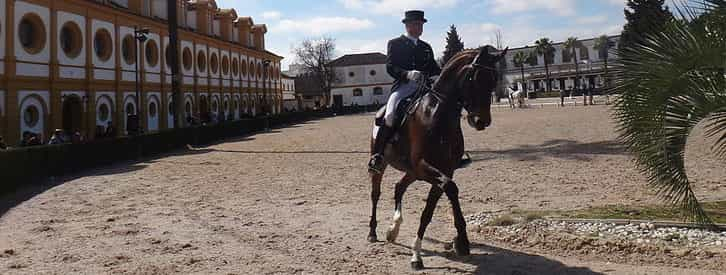
Building and horses at the Equestrian School in Jerez de la Frontera
Facilities of the Royal Andalusian School of Equestrian Art in Jerez de la Frontera

Among its facilities you will find the area reserved for saddlery and harness, the 19th-century Palacio Duque de Abrantes (now the headquarters), the Carriage Museum and the Equestrian Art Museum. These buildings serve not only for training and daily practice but are also major tourist attractions due to their historical and cultural value.

The Royal Andalusian School of Equestrian Art gives visitors the chance to immerse themselves in Andalusian equestrian tradition through shows that display the elegance and skill of the horses and riders trained on site. It is an essential destination for anyone interested in horses and Andalusian culture.

History of Equestrian Art in Andalusia

Horses have held a special place in Andalusia since ancient times. During the Middle Ages, equestrian games were practised as military training. Over the centuries these games evolved into the refined displays we see today.

The Royal Andalusian School of Equestrian Art, based in Jerez de la Frontera, keeps this heritage alive through its dedication to preserving and teaching classical dressage techniques.

Places of Interest at the Royal Andalusian School of Equestrian Art

The school comprises several buildings and spaces that blend history, culture and equestrian practice. Below are some of the main areas visitors can explore:

  1. Carriage Museum: Displays a collection of historical carriages with audiovisual and virtual reality systems. (Map)
  2. Equestrian Art Museum: Explains the origins and worldwide development of equestrian art, with interactive exhibits in several languages.
  3. Botanical Garden: Home to examples of Przewalski’s horses (one of the last truly wild horse breeds, dating back around 12,000 years) and a wide range of native and exotic plants.
  4. Saddlery Workshop: A restoration and research laboratory for horse tack, preserving traditional craftsmanship.
  5. Palacio del Recreo de las Cadenas: Venue for equestrian-related exhibitions, with noble rooms and an old chapel open to visitors.
  6. Covered Riding School: Stage for the famous show “How the Andalusian Horses Dance”.
  7. Competition Arena: Hosts major classical dressage events and championships.

Carriage Museum: Evolution of Horse-Drawn Transport

This museum showcases a collection of carriages, giving visitors a fascinating insight into the history of horse-drawn transport. The exhibition includes audiovisual systems and virtual reality experiences that make the visit interactive and engaging. (Map)

Equestrian Art Museum: Origins and Global Development

The aim of this museum is to show visitors the origins and evolution of equestrian art worldwide. Detailed displays and historical narratives explain the importance and development of equestrian practices over the centuries.

Interactive systems are available in English, French, German and Spanish, and all texts are provided in both Spanish and English, ensuring an enriching experience for international visitors.

Botanical Garden: Plants and Ancient Horses

In this garden you can see examples of Przewalski’s horses, one of the last remaining truly wild horse breeds with approximately 12,000 years of history. The garden also features a beautiful collection of native and exotic plant species, creating a natural and educational environment.

Saddlery Workshop: Handcrafted Restoration

This area houses a laboratory dedicated to the restoration and research of horse tack, always maintaining artisanal methods. Skilled craftspeople work carefully to conserve and restore saddles and harnesses, ensuring that ancient traditions and techniques survive for future generations.

Palacio del Recreo de las Cadenas: Historical Exhibitions

This historic palace hosts exhibitions related to equestrian art. Visitors can also explore noble rooms and the former chapel, gaining a deeper understanding of the region’s history and culture.

Activities at the Royal Andalusian School of Equestrian Art

The school offers a range of activities that allow visitors to experience equestrian art up close. From live performances to guided tours, there are options for everyone interested in this Andalusian tradition.

  • “How the Andalusian Horses Dance” Show: Choreographed routines set to Spanish music, performed by riders wearing 18th-century traditional costumes in the Covered Riding School.
  • Classical Dressage Competitions: High-level events held in the Competition Arena where top riders and horses demonstrate their skills.
  • Facility Tours: Guided visits through the museums, gardens, workshops and riding arenas to see the daily life of the school.
Video overview of the Royal Andalusian School of Equestrian Art

Getting to Jerez de la Frontera: Transport Guide to the Royal Andalusian School of Equestrian Art

Jerez de la Frontera, in the province of Cadiz, offers several ways to reach the Royal Andalusian School of Equestrian Art and explore the surrounding region. There are no direct public transport links from Malaga Airport, so the most convenient options are usually hiring a car or booking a private taxi transfer. Both allow flexibility to visit nearby sherry wineries, beaches or other towns in Andalusia.

Family car hire

Car Hire: Freedom to Explore

To travel freely around Jerez de la Frontera and the surrounding area – including sherry routes, beaches and nearby white villages – hire a car at Malaga Airport. The journey covers roughly 220 km via the A-7 and AP-4 motorways and takes about 2 hours 30 minutes, allowing stops at points of interest along the way.

Hire a Car at Malaga Airport
Private family transfer to Jerez de la Frontera

Private Taxi / Transfer: Direct and Comfortable

For a stress-free arrival straight to the School or your accommodation in Jerez, book a private taxi or transfer from Malaga Airport. This option avoids waiting times, handles luggage easily and is especially convenient for families or groups. The journey takes approximately 2 hours 30 minutes.

Book Your Transfer

*No credit card details or advance payment required at the time of booking. We recommend reserving well in advance to secure the best rates and availability.

Other Transport Options in Jerez de la Frontera

Once in Jerez, local buses connect the city centre with the School, although a hired car is far more convenient for visiting the wider province of Cadiz. From Malaga Airport, it is possible to combine train services via Seville, but note that there is no direct route and changes are required.

Map showing the location of the Royal Andalusian School of Equestrian Art in Jerez de la Frontera

Tourist Information – Royal Andalusian School of Equestrian Art

ROYAL ANDALUSIAN SCHOOL OF EQUESTRIAN ART FOUNDATION: Avda. Duque de Abrantes, s/n, 11407 Jerez de la Frontera (Cadiz).

Telephone: Bookings 956 31 80 08 – Fax: 956 31 80 15.

Official website: www.realescuela.org.

Opening hours: 10:00 to 13:00 Monday to Saturday.

Frequently Asked Questions about the Royal Andalusian School of Equestrian Art

How long does the “How the Andalusian Horses Dance” show last?

The performance lasts approximately 1 hour and 45 minutes, including an interval. It is advisable to arrive early to secure good seats.

Can I visit the School without watching the main show?

Yes, guided tours of the facilities (museums, riding arenas, gardens and saddlery workshop) are available separately from the main performance. These visits show the everyday life of the school and its horses.

Is photography allowed during the show?

Photography without flash is generally permitted throughout most areas and during the performance. The use of flash and professional video recording is prohibited without prior authorisation.

Is the School suitable for children?

Yes, both the show and the guided visits are suitable for all ages. Children usually enjoy seeing the horses up close and the interactive explanations in the museums.

Do I need to book in advance to visit the School?

Advance booking is strongly recommended, particularly for the main show and during peak seasons (spring and autumn). Guided tours have limited places.

Does the School offer riding lessons or courses for the public?

The School focuses mainly on professional training of riders and horses, but it occasionally organises courses, clinics and masterclasses for amateurs and professionals. Check the official website for current offerings.