Gibraltar: A practical guide for visiting the Rock from Malaga

Gibraltar is a British Overseas Territory at the southern tip of the Iberian Peninsula, opposite the coast of Cadiz. In just 6.8 km² it packs a unique mix: the imposing Rock, Europe’s only wild monkey population, spectacular caves, historic tunnels, a distinctly British atmosphere and views across the Strait of Gibraltar with Africa in the background.
It is one of the most rewarding day trips from the Costa del Sol. From Malaga you can easily visit Gibraltar in a single day and enjoy a blend of nature, military history and a very particular atmosphere that sits between Andalusian and British culture.
Since 15 July 2026 there have been no border controls at the land crossing between La Linea de la Concepcion and Gibraltar. You can cross freely on foot or by car.
When is the best time to visit Gibraltar?
The most pleasant periods are spring (April–May) and autumn (September–October). The weather is mild, there are fewer visitors and the temperatures are ideal for walking up the Rock.
Summer (July–August) is hotter and busier, but perfect if you want to combine the visit with a beach day. Winter is quieter and cheaper, though it can be windy and rainy.
What to see and do in Gibraltar
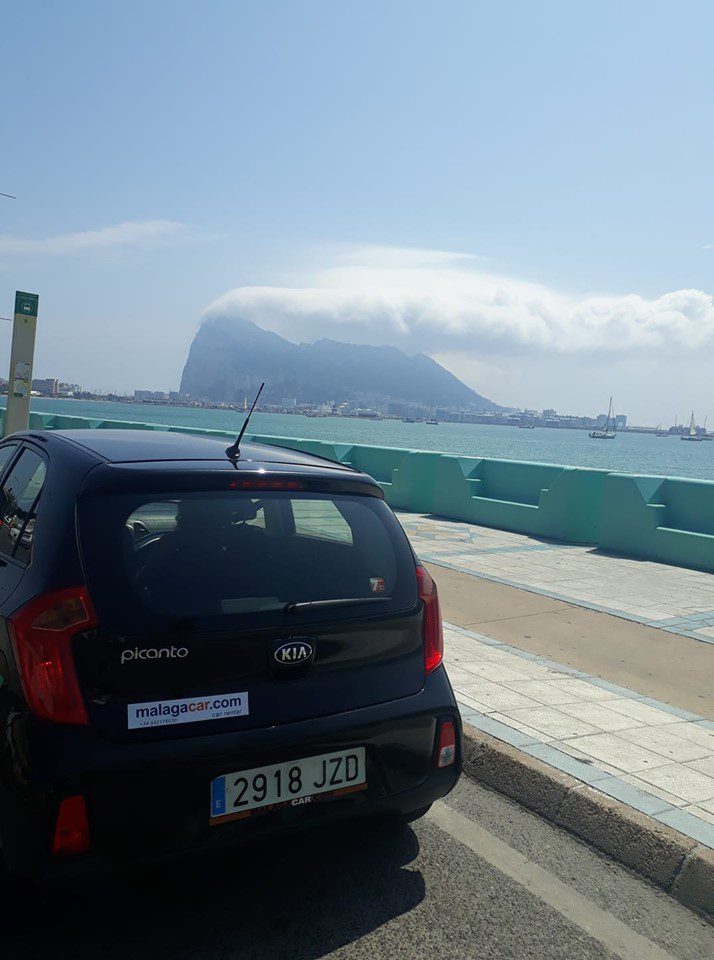
The Rock and the Upper Rock Nature Reserve
This is the main attraction. From the top you look out over the Strait of Gibraltar, the Bay of Algeciras and, on clear days, as far as the African coast. Most of the key sights are inside the Nature Reserve: the monkeys, St Michael’s Cave, the Skywalk, the Windsor Suspension Bridge and the historic tunnels.
Important in 2026: The cable car is closed for major refurbishment (reopening expected around 2027). You can reach the Upper Rock on foot, by official Rock Tour taxi or on the new electric shuttle from the town centre (including Nature Reserve entry).
Entry to the Upper Rock Nature Reserve costs approximately £30 for adults and £22 for children (ages 5–11) and covers most attractions on the Rock.
The Barbary macaques (Apes’ Den)
The Barbary macaques are the symbol of Gibraltar and the only wild monkey population in Europe. They originally come from North Africa (Morocco and Algeria) and were introduced here. They are already mentioned in documents from the 17th century – most likely arriving during the Moorish period or in the early years of British presence.
A well-known legend says that the British will only leave Gibraltar when the monkeys disappear. During the Second World War the population dropped sharply, so Winston Churchill ordered more animals to be brought from Africa to reinforce the colony.
Today the monkeys roam freely on the Upper Rock. Feeding or touching them is strictly forbidden – they are wild animals and can bite.
View on the map
St Michael’s Cave
One of the most spectacular caves in Gibraltar. The colourfully lit stalactites and stalagmites create an almost cathedral-like atmosphere. In Victorian times the cave was used for picnics, parties and even duels. Today the largest chamber serves as a natural auditorium and hosts concerts, light shows and cultural events.
View on the map
Great Siege Tunnels
During the Great Siege of Gibraltar (1779–1783) the British cut kilometres of galleries into the rock so that cannons could fire on the bay without being exposed. Today you can walk through sections of these tunnels and appreciate the ingenious defence of the Rock.
View on the map
City Under Siege Exhibition
Housed in one of the oldest buildings constructed by the British after the capture of 1704, this exhibition shows what life was like in Gibraltar during the sieges, with reconstructions and original objects.
View on the map
Europa Point and the Pillars of Hercules
At the southern tip of Gibraltar you will find Europa Point with its lighthouse, the Ibrahim-al-Ibrahim Mosque and views across the Strait to Morocco. Nearby is the Pillars of Hercules viewpoint, which recalls the classical myth of the ends of the known world.
Europa Point on the map ·
Pillars of Hercules on the map
Artillery batteries: O’Hara’s Battery and others
Gibraltar is dotted with historic artillery batteries that for centuries controlled the Strait. One of the most interesting is O’Hara’s Battery, located at the highest point of the Rock. From here it was theoretically possible to reach the African coast. The battery is open to the public and gives a strong sense of the strategic importance of the site.
O’Hara’s Battery on the map
Gibraltar Airport
One of the most unusual features of Gibraltar is its airport: the runway crosses the main road that links La Linea with the town centre. Although a tunnel has now been built for road traffic, pedestrians can still cross the runway area – an experience that surprises many visitors.
View on the map
Dolphin watching
The Strait of Gibraltar is one of the best places in Europe to see wild dolphins. Several operators run boat trips from the harbour. Common dolphins, striped dolphins and occasionally pilot whales or even larger whales are regularly sighted. A highly recommended activity when the weather is good.
How to get to Gibraltar from Malaga
The distance from Malaga-Costa del Sol Airport to Gibraltar is approximately 125–140 kilometres. By car via the A-7 / AP-7 the journey usually takes between 1 hour 30 minutes and 1 hour 50 minutes, depending on traffic.
Since 15 July 2026 there have been no border controls at the land crossing between La Linea de la Concepcion and Gibraltar. You can cross freely on foot or by car without showing documents or waiting in queues.
Many visitors still prefer to park in La Linea (cheaper and simpler) and walk across. If you want to drive into Gibraltar, that is now straightforward. Parking inside Gibraltar remains limited and more expensive.
You will find detailed advice on driving in this guide: Heading to Gibraltar by car.

Car hire: the most flexible option
With a hire car you can drive comfortably to Gibraltar or La Linea and move around freely. You can also combine the visit with other stops on the Costa del Sol or in the Campo de Gibraltar.
Hire a car at Malaga Airport

Taxi or private transfer
If you prefer not to drive, you can book a private transfer from Malaga Airport or from your accommodation to La Linea or the centre of Gibraltar.
Book a transfer from Malaga Airport
*There is no need to enter credit card details or make an advance payment. We recommend booking in good time.
Other transport options
There are direct buses from Malaga and from the airport to the bus station in La Linea de la Concepcion (around 2 hours). From the station you can reach the centre of Gibraltar on foot in a few minutes – with no controls.